12 Best AliExpress Alternatives for Dropshipping in 2026

The best AliExpress alternatives in 2026 depend on what's actually wrong with AliExpress for you. If it's slow shipping, look at Spocket, Zendrop or Doba, which stock products in the US and Europe. If it's price, go upstream to Alibaba, 1688 or Made-in-China and buy closer to the factory. If you want AliExpress-style prices with better fulfilment, CJdropshipping is the usual next step. And if you're thinking about Temu, read the caveat further down before you build a store on it.
Below are 12 real options, what each is good and bad at, a comparison table, and a simple way to choose.
Why sellers look for AliExpress alternatives
AliExpress is still the easiest place to start dropshipping. No minimums, a huge catalogue, buyer protection and apps like AliDrop that automate orders. But it has a few problems that get worse as a store grows:
- Delivery times. AliExpress Choice has improved things, but most products still ship from China. A 7 to 15 day wait is fine for a $15 gadget and painful for a $60 product.
- Inconsistent suppliers. Thousands of independent sellers list the same item. Quality, packaging and stock levels vary, and your best supplier can disappear overnight.
- No branding. Most sellers won't add custom packaging or inserts at low volume.
- Rising landed costs. The US ended its de minimis exemption, and the UK has published plans to remove its £135 customs duty relief by October 2028 at the latest. Cheap single parcels from China are getting more expensive in key markets.
- Margins at scale. Once you're doing 30+ orders a day, you're paying retail-ish prices that a factory or agent would beat.
None of that means you should leave AliExpress entirely. Plenty of stores test products on AliExpress and move winners elsewhere. The point is to know which alternative fixes which problem.
12 best AliExpress alternatives for dropshipping
1. Spocket
Best for: fast US and EU delivery and branded orders.
Spocket connects your store to suppliers based mainly in the US and Europe, so orders typically arrive in days rather than weeks. Many suppliers support branded invoicing, and product pricing tends to be higher than AliExpress because you're paying for local stock. Plans start at $39.99 a month (Starter), with Professional at $59.99 and higher tiers above that, and there's a 7-day trial according to Spocket's pricing page. It's a sister company of Dropshiptool. We've covered it in depth in our Spocket review.
Watch out for: thinner margins on low-ticket items. Spocket works best for products you can sell at $30 or more.
2. CJdropshipping
Best for: AliExpress-like prices with better fulfilment and sourcing.
CJ is a dropshipping agent and marketplace in one. You can list products from its catalogue or submit a sourcing request for something you found elsewhere, and CJ will quote a price. It runs warehouses in China and several overseas locations, including the US and Europe, so some products ship locally. It's free to use, with optional paid tiers. Custom packaging, product photography and inspection are available as add-on services. Our CJdropshipping review goes deeper.
Watch out for: shipping and warehouse fees that change with weight and route. Always check the full landed cost in CJ's calculator, not just the product price.
3. Zendrop
Best for: US sellers who want fulfilment, branding and training in one subscription.
Zendrop sources from China and has US warehousing, and handles fulfilment for you. Zendrop's pricing page lists a free plan, Pro at $49 a month and Plus at $79, with automated fulfilment only on the paid plans. Custom packaging and US stock are the main reasons people upgrade.
Watch out for: the free plan is limited. Budget for a paid plan if you want automation.
4. Alibaba.com
Best for: moving a proven product to factory pricing.
Alibaba is the B2B side of the same group that owns AliExpress. Prices are lower, but suppliers usually expect bulk orders, and you negotiate terms, packaging and shipping yourself. Trade Assurance protects payments made through the platform. Alibaba also runs a dropshipping portal with no-minimum products, but the classic use is buying stock once a product sells daily. Our AliExpress vs Alibaba comparison and the Alibaba sourcing guide cover how to do that safely.
Watch out for: trading companies posing as factories, and sample quality that doesn't match production runs.
5. DHgate
Best for: small wholesale lots at prices between AliExpress and Alibaba.
DHgate is a Chinese marketplace where many sellers accept small orders, often from one to ten units. It's useful for testing a product in small batches. Payments are held until you confirm delivery, which gives some protection.
Watch out for: DHgate has a reputation for replica and branded knock-off listings. Don't touch anything with a brand name you don't own. It's a fast way to lose your payment processor and your store.
6. Banggood
Best for: electronics, gadgets and hobby gear.
Banggood is a Chinese retailer rather than an open marketplace, so you buy from Banggood itself. It has a dropshipping program and stock in overseas warehouses (US and several European countries are listed in its dropshipping materials), which can cut delivery times on popular SKUs. See our Banggood vs AliExpress comparison.
Watch out for: a smaller catalogue than AliExpress, and warehouse stock that varies by item.
7. Made-in-China.com
Best for: sourcing industrial, home and hardware products from verified manufacturers.
Made-in-China.com is a B2B directory like Alibaba, with a strong focus on manufacturers and audited supplier profiles. It's a good second source to compare quotes against Alibaba, especially for furniture, tools, lighting and machinery.
Watch out for: minimum order quantities. It isn't built for one-unit dropshipping.
8. 1688 (through a sourcing agent)
Best for: the lowest prices, once you have volume.
1688 is Alibaba Group's domestic Chinese wholesale marketplace. Many AliExpress sellers buy their stock here, so prices are often well below AliExpress. The site is in Chinese, built for buyers inside China, and most suppliers don't ship abroad. International sellers usually go through a sourcing agent, who orders, inspects, repacks and ships for a fee.
Watch out for: agent quality. A good agent is worth more than a cheap one. Ask for inspection photos and test with a small order first.
9. Syncee
Best for: finding suppliers in many countries in one marketplace.
Syncee is a dropshipping and wholesale marketplace with suppliers from the US, Europe, Australia and elsewhere, and integrations with Shopify, WooCommerce, Wix and other platforms. Syncee's pricing starts with a free browsing plan, then Basic at $39.99 a month for 100 imported products and Pro at $59.99 for 250.
Watch out for: supplier quality varies more than on curated platforms. Check each supplier's shipping times and return policy individually.

10. Faire
Best for: stocking independent brands in small wholesale quantities.
Faire isn't dropshipping. It's a wholesale marketplace where retailers buy from independent brands (the homepage says over 100,000 of them). It belongs on this list because it's the easiest way to stock unique, non-AliExpress products in small quantities. Eligible retailers get payment terms: according to Faire's help centre, you aren't charged until 60 days after ordering. Minimums are set by each brand.
Watch out for: you hold the stock. It suits hybrid stores and boutiques more than pure dropshippers.

11. Doba
Best for: US-stocked products across many sales channels.
Doba is a US dropshipping marketplace. Its site says 90% of products are stocked in US warehouses and lists over 450,000 US-stocked items, with integrations for Shopify, WooCommerce, eBay, Amazon, Walmart and TikTok Shop. See doba.com for current plans.
Watch out for: margins. US stock costs more, and many Doba products are also sold by big retailers, so you'll be competing on price with Amazon.
12. Temu (and why it's a weak choice)
Best for: price research, not supply.
Temu prices are often lower than AliExpress, which is why people ask about it. But Temu's terms of use say you use the service "solely for personal (non-commercial) use". Accounts placing lots of single orders to different addresses risk cancellations or bans, there's no dropshipping API, and you can't get supplier contact or branded packaging. Use Temu to sanity-check pricing (if your product sells for $6 on Temu, your $29.99 listing needs a strong reason to exist) and source elsewhere. Our article on why Temu is so cheap explains the economics.
AliExpress alternatives compared
| Platform | Ships from | Typical speed (US/EU) | Cost model | Best for |
|---|---|---|---|---|
| Spocket | Mainly US and EU | Days | Monthly plan from $39.99, plus product cost | Fast delivery, branded invoices |
| CJdropshipping | China plus overseas warehouses | About 1 to 2 weeks from China, faster from local stock | Free, optional paid tiers; pay product and shipping | Cheap products with better fulfilment |
| Zendrop | China and US | Faster with US stock | Free plan; Pro $49/mo, Plus $79/mo | US sellers wanting branding |
| Alibaba.com | China (mostly) | Depends on freight method | Bulk pricing, negotiated | Scaling a proven product |
| DHgate | China | Similar to AliExpress | Per-order pricing, small lots | Small wholesale tests |
| Banggood | China plus overseas warehouses | Faster for warehouse SKUs | Retail pricing, dropship program | Electronics and gadgets |
| Made-in-China.com | China | Depends on freight method | Bulk pricing, MOQs | Manufacturer sourcing |
| 1688 + agent | China | Agent dependent | Lowest product cost plus agent fee | High volume margins |
| Syncee | US, EU, AU and more | Varies by supplier | Free to browse; paid from $39.99/mo | Multi-country supplier search |
| Faire | Brand's own location | Wholesale shipping | Wholesale, brand minimums, net 60 for eligible retailers | Unique stock, hybrid stores |
| Doba | Mostly US | Days | Subscription | US stock on many channels |
| Temu | China and local warehouses | Varies | Consumer pricing | Price research only |
Prices are from each platform's own pricing page as of October 2026 and change often. Check before you commit.
How to choose the right AliExpress alternative
Start with the problem, not the platform.
- Delivery complaints or long payment holds? Move to local stock: Spocket, Zendrop US warehouses, CJ overseas warehouses, or Doba for the US.
- Margin too thin at scale? Go upstream. Get quotes from CJ, then Alibaba or Made-in-China, and consider 1688 through an agent once you sell 30+ units a day.
- Need branding to build a real store? CJ, Zendrop and Spocket suppliers offer custom packaging or branded invoices. Alibaba factories will do full private label at volume.
- Want products nobody else has? Faire and Syncee give you access to independent brands that don't sell on AliExpress.
- Selling in the UK or EU? Spocket, Syncee and local wholesalers cut out import charges. Our AliExpress dropshipping UK guide covers the VAT side.
Check these before switching
- Landed cost: product + shipping + duty + platform fees. A cheaper product with $4 more shipping isn't cheaper.
- Real delivery time: order a sample to your customers' country and time it.
- Integration: does it connect to Shopify or your platform and sync tracking automatically?
- Returns: where do returns go, and who pays?
- Supplier communication: send a question and see how fast and how clearly they answer.
A worked example: when switching pays off
Say you sell a posture corrector for $34.99 to US customers. From AliExpress it costs $7.20 plus $3.10 shipping, arrives in about 12 days, and your refund rate is 9%. Moving to a US-stocked supplier at $12.50 including shipping costs you $2.20 more per order. If faster delivery cuts refunds to 4%, you save roughly $1.75 per order in refunds alone (5% of $34.99), and conversion usually improves when the product page can promise 3 to 5 day delivery. At 20 orders a day, a one-point lift in conversion more than covers the difference. At 2 orders a day, it probably doesn't, and AliExpress is the better choice. The numbers decide, not the platform's marketing.
Run your own version with our profit margin calculator.
Common mistakes when leaving AliExpress
- Switching suppliers before validating the product. A faster supplier won't fix a product nobody wants.
- Moving everything at once. Move your top one or two products first and keep AliExpress for testing.
- Buying bulk too early. Wait for steady daily sales before you commit cash to stock from Alibaba or 1688.
- Ignoring product images. New suppliers often have different packaging or colours. Update your listings so customers get what they saw.
Where Dropshiptool fits
A supplier only matters if the product sells. Before you switch suppliers or place a bulk order, check that the product has real, lasting demand. Dropshiptool's Product Database shows products that Shopify stores are actually selling, and the Sales Tracker estimates revenue for those stores over time, so you can see whether a product has been selling for months or just spiked last week.
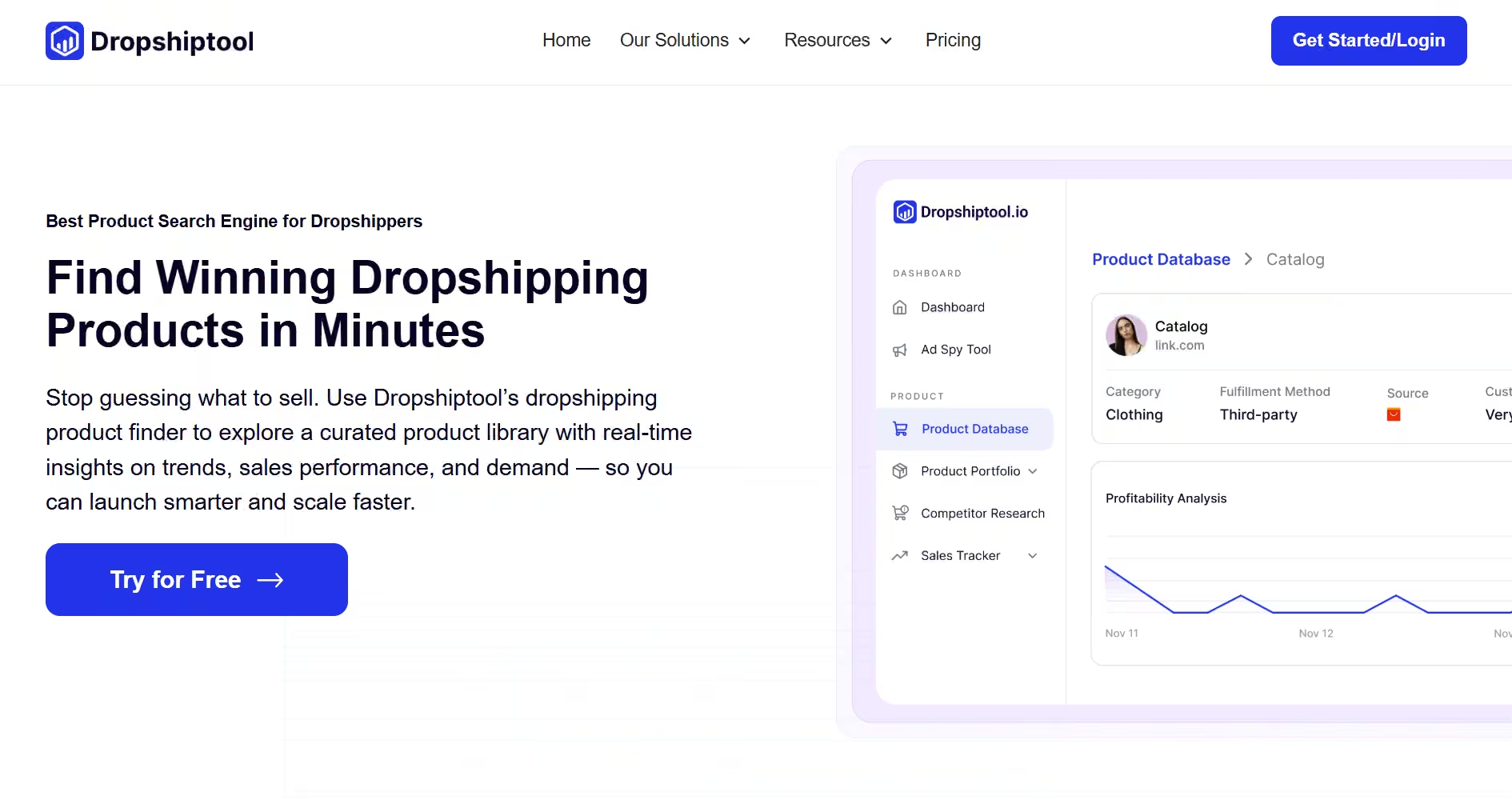
Once you know a product works, finding the supplier is the easy part. Try Dropshiptool to check demand first.
The bottom line
There's no single best AliExpress alternative. Spocket and Doba fix delivery times, CJdropshipping and Zendrop fix fulfilment, Alibaba, Made-in-China and 1688 fix margins at volume, and Faire and Syncee give you products other stores don't have. Temu is a pricing reference, not a supplier. Most profitable stores end up using two or three of these, and many still test new products on AliExpress first. For a broader view, read our guide on how to find dropshipping suppliers, and keep an eye on the AliExpress Dropshipping Center for supplier data if you stay on AliExpress.
Ready to find products worth sourcing? Create your Dropshiptool account and see what's selling before you pick a supplier.