18 Secret Websites to Make Money Online in 2026

The best secret websites to make money aren't really secret. They're just less crowded than Swagbucks and Fiverr, so there's less competition for each task, listing or gig. Below are 18 websites to make money online that still operate in 2026, grouped by how you actually earn: selling things you own, renting out space, giving feedback, training AI, selling digital files, and building a store. For each one you get what it pays, what it takes as a cut, and how the money reaches you.
One honest note before the list. None of these will replace a salary in a month. Survey and task sites top out at pocket money for most people. The ones that can grow into real income (reselling, digital products, ecommerce) need more effort up front, and that's exactly why fewer people use them.
Secret websites to make money: the quick comparison
Use this table to shortlist two or three sites that match the time and assets you have. Fees and payout rules were checked against each platform's own help pages where available.
| Site | How you earn | What it costs or pays | How you get paid |
|---|---|---|---|
| Swappa | Sell used phones, tablets, laptops | Seller fee 3% plus payment processing | PayPal or Stripe |
| Gazelle | Trade in old phones for a fixed quote | Instant quote, free shipping | PayPal (about 48 hours), check, Amazon code |
| BookScouter | Compare buyback offers for textbooks | Free to use; vendors pay you | Depends on the vendor (often PayPal or check) |
| Chairish | Sell vintage and designer furniture | Commission from 40% (default plan) down to tiered rates on paid plans | Paid after the sale completes |
| Flippa | Sell a website, app or online store | Listing fee plus success fee | Escrow |
| Neighbor | Rent out garage, driveway or storage space | Free to list; 4.9% + $0.30 processing on payouts | Monthly bank deposit |
| Peerspace | Rent your home or studio by the hour for shoots and events | Host fee 15% to 20% | Bank payout |
| Swimply | Rent your pool by the hour | Hosts keep about 70% to 85% of each booking | Paid through the platform |
| UserTesting | Record yourself using websites and apps | Pay shown per test; live interviews pay more | PayPal, about 14 days after the test |
| Prolific | Take part in academic research studies | Minimum $8/£6 per hour; $12/£9 recommended | PayPal |
| Respondent | Paid interviews and focus groups | Typically $50 to $250 per session | Paid after the study |
| DataAnnotation | Rate and write AI chatbot responses | Projects advertised from $20/hour, more for coding | Weekly payouts |
| Clickworker | Short micro-tasks (tagging, writing, research) | Varies by task | Weekly; PayPal minimum €10 |
| Gumroad | Sell ebooks, templates, presets | 10% + $0.50 per direct sale, plus processing | Weekly payouts |
| Payhip | Sell digital products and courses | Free plan takes 5%; paid plans 2% or 0% | PayPal or Stripe |
| Teachers Pay Teachers | Sell lesson plans and classroom resources | Basic sellers keep 55%, Premium 80% | Paid out to your linked account |
| Adobe Stock | License your photos and videos | 33% royalty on photos, 35% on video | PayPal, Payoneer or Skrill from $25 |
| Spocket and AliDrop | Run a dropshipping store without holding stock | You keep the margin between supplier cost and your price | Your store's payment provider |
Sell what you already own
Reselling is the fastest way to turn a weekend into real money because the inventory is free: it's sitting in your drawers. These sites are smaller than eBay, which means buyers are more targeted and you'll deal with fewer lowball offers.
1. Swappa
Swappa is a marketplace for used tech, mostly phones, tablets, laptops and game consoles. Every listing is checked by a human before it goes live, and stolen or blacklisted phones are blocked, so buyers trust it more than a random classified ad. According to Swappa's fee guide, sellers pay a flat 3% plus payment processing (PayPal at 3.49% + $0.49, or Stripe for eligible sellers). On a $100 phone that leaves you about $93. Compare that with eBay's final value fees and Swappa usually wins for anything with a screen.
2. Gazelle
If you don't want to deal with buyers at all, Gazelle buys the phone from you directly. You answer a few questions, get a quote that's valid for 30 days, ship it free, and get paid once it passes inspection. Gazelle's payment page says PayPal arrives within 48 hours of accepting the offer; checks take up to 14 days. You'll earn less than on Swappa, but it takes ten minutes. Quick side note: Decluttr, which many older "make money" lists still recommend, stopped taking trade-ins in 2025, so skip any guide that sends you there.
3. BookScouter
BookScouter doesn't buy books. It compares buyback offers from 30+ vendors when you type or scan an ISBN, then you sell to whichever pays most and ship with their prepaid label. Textbooks from the last two or three years are where the money is. Some people go further and buy cheap textbooks at library sales and thrift stores, then flip them through BookScouter. A $2 hardback that a vendor buys for $25 isn't rare in August and January.
4. Chairish
Chairish is a curated marketplace for vintage furniture, art and decor. It's picky, so listings need good photos, but buyers here pay design-shop prices. The trade-off is a big commission: Chairish's help center lists 40% on the default Consignor plan and 30% on the Professional plan, with lower tiered rates for paid memberships. It's worth it for a mid-century sideboard you'd struggle to sell locally for half the price.
5. Flippa
Flippa is a marketplace for buying and selling online businesses: content sites, apps, newsletters and Shopify stores. If you've built a small store or blog that earns a few hundred dollars a month, buyers on Flippa will often pay a multiple of yearly profit for it. Sellers pay a listing fee plus a success fee that depends on the package and sale price, so read the current pricing page before you list. It also works the other way: some people buy neglected stores cheaply, fix them, and resell. That's a real business, not a side hustle, so treat it like one.
Not sure if flipping items is allowed in your situation? Our guide on whether reselling is legal covers first-sale rules, counterfeit risk and when you need a seller's permit.
Rent out space and things you don't use
Renting is the closest thing to passive income on this list. You set it up once, then answer a few messages a month.
6. Neighbor
Neighbor is like Airbnb for storage. People rent your empty garage, basement, spare room or driveway to park a car, boat or RV, or to store boxes. Listing is free. When you have a paying renter, Neighbor's host page says it takes a processing fee of 4.9% + $0.30 from your payout, and money lands in your bank account monthly. Driveway and RV parking near cities tends to rent fastest. Check your lease or HOA rules before you list; that's the mistake most new hosts make.
7. Peerspace
Peerspace rents homes, lofts, studios and backyards by the hour to photographers, film crews and small events. A bright apartment with good natural light can book for content shoots on weekdays when you're at work anyway. Peerspace's help center puts the host fee at 15% to 20%, depending on location and hosting history. Expect to clean and hand over keys, so it's less passive than Neighbor.
8. Swimply
Swimply lets you rent your pool (and in some cities, tennis courts or hot tubs) by the hour. Swimply's own host blog says hosts keep about 70% to 85% of each booking after the service fee, and the platform includes liability cover for hosts. It's seasonal in most of the US, so think of it as summer money.
Get paid for opinions and feedback
These are the most "secret" of the secret websites to make money, mainly because they don't advertise much. The catch: you need to qualify for each study, and the good ones fill up in minutes.

9. UserTesting
UserTesting pays you to use a website or app while speaking your thoughts out loud, recorded by your screen and microphone. Companies use the videos to find what confuses real users. UserTesting's help center says pay depends on the test type and is shown in your test feed before you start, live conversations pay extra, and payments are sent 14 days after a test. Contributors commonly report around $10 for a standard short test. You'll fail a lot of screener questions at first. That's normal.
10. Prolific
Prolific connects you with university and company researchers running surveys and experiments. It's the most fairly paid survey-style site around because researchers can't go below a floor: Prolific's rules set a minimum of $8 (£6) per hour and recommend $12 (£9). Studies run from two minutes to an hour, and there's a waitlist in some countries. Keep the tab open; new studies get snapped up fast.
11. Respondent
Respondent is where the money in research is. Instead of surveys, you're booked for 30 to 90 minute interviews with product teams who want to hear from people in your job or with your habits. Respondent says online interviews typically pay $50 to $150 and focus groups or in-person studies $150 to $250. Professionals in IT, healthcare or finance get the most invites. Fill out your profile in detail; a blank profile gets nothing.
Train AI and do micro-tasks
12. DataAnnotation
AI companies need people to rate chatbot answers, write example prompts and check facts. DataAnnotation has been one of the better-paid options, advertising projects starting at $20 per hour, with more for coding and expert subjects like law or medicine. You take a qualification test, and if you pass you'll see projects on a dashboard. Work isn't guaranteed and can dry up for weeks, so don't build a budget around it.
13. Clickworker
Clickworker offers small paid tasks: tagging images, writing short product descriptions, checking search results, recording voice samples. Each task pays cents to a few dollars. Clickworker's payment rules list weekly payouts and a €10 minimum for PayPal. Fine for filling dead time on the bus. Not much more than that.
Sell digital products
This group takes the most work up front and has the highest ceiling. You make a file once and sell it many times. Our guide to starting a print-on-demand business follows the same "design once, sell repeatedly" logic if you'd rather sell physical items.
14. Gumroad
Gumroad is the simplest way to sell an ebook, Notion template, Lightroom preset, font or short course. You upload, set a price, share the link. There's no monthly fee; Gumroad takes 10% + $0.50 per direct sale, plus card processing, and a flat 30% on sales that come from its Discover marketplace. Best if you already have an audience on X, YouTube or a newsletter.
15. Payhip
Payhip does the same job as Gumroad with a cheaper fee structure for small sellers. The free plan takes 5% per sale, the Plus plan ($29/month) takes 2%, and Pro ($99/month) takes 0%, with Stripe or PayPal processing on top. It also handles EU VAT on digital goods, which is a headache if you sell to Europe.
16. Teachers Pay Teachers
Teachers buy lesson plans, worksheets and classroom decor from other teachers here. If you teach (or used to), this is a natural fit. Basic sellers keep 55% of each sale and Premium sellers (an annual fee of $59.95) keep 80%, with a small per-item transaction fee on low-priced resources. Seasonal spikes come in August and January when teachers plan new terms.
17. Adobe Stock
Adobe Stock lets you license photos, videos and illustrations to designers who use Creative Cloud. Adobe's contributor guidelines set royalties at 33% for photos and 35% for video, paid via PayPal, Payoneer or Skrill once you reach $25. Generic, well-lit shots of everyday things (hands on a keyboard, groceries, home offices) outsell artsy ones. It takes hundreds of images before monthly income looks like anything.
Build an online store (the dropshipping route)
18. Spocket and AliDrop
Everything above pays you for your time or your stuff. A store pays you for every order, even while you sleep, which is why it's the option with no ceiling. With dropshipping you list products on your own Shopify store, a customer buys, and a supplier ships the item for you. You keep the difference between the supplier's price and yours. Spocket connects you with suppliers in the US and Europe for faster shipping, and AliDrop imports AliExpress products into Shopify in a few clicks.
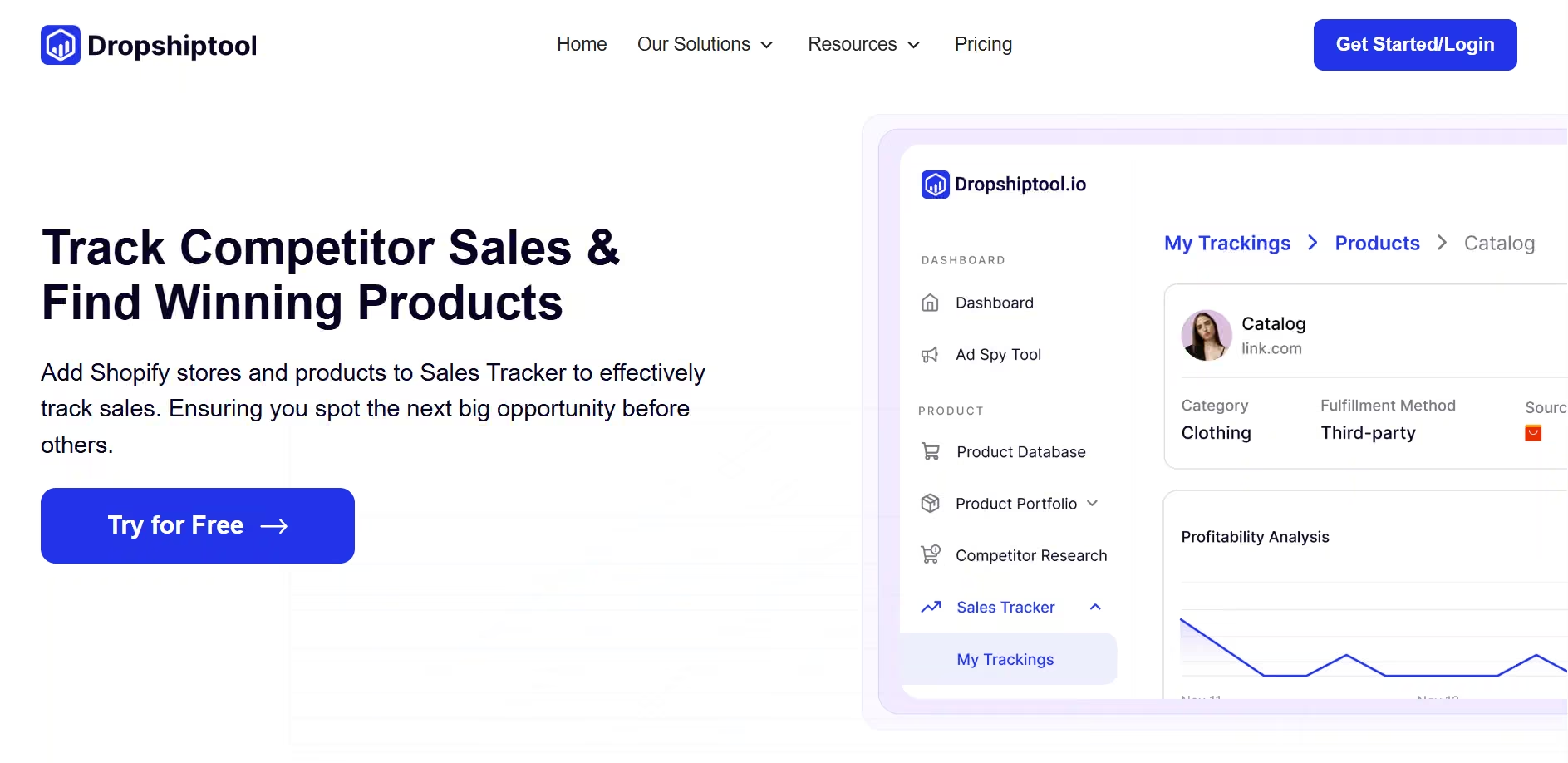
It isn't free money. You'll pay for a Shopify plan and ads, and most products you test won't sell. The people who make it work pick products with proof of demand rather than guessing. That's where a research tool earns its keep: Dropshiptool's Sales Tracker shows what real Shopify stores are selling and roughly how much, so you can copy what's already working. You can try Dropshiptool free and look at a few stores in your niche before you spend a cent on ads.
Curious what the numbers look like once a store is running? We broke down real margins in how much dropshippers make, and our guide on starting dropshipping for free shows how to keep launch costs low.
How to choose the right money-making website
Not every one of these secret websites to make money suits every person. Match the site to what you actually have more of: time, stuff, space, skills or cash to invest.
- Spare 20 minutes a day, no skills: Prolific and UserTesting. Expect pocket money, paid reliably.
- A garage, driveway, pool or nice apartment: Neighbor, Swimply or Peerspace. Low effort once set up.
- Clutter and old tech: Swappa, Gazelle, BookScouter, Chairish. One-off cash, fast.
- A professional background: Respondent and DataAnnotation pay the best hourly rates on this list.
- A skill you can package: Gumroad, Payhip, Teachers Pay Teachers, Adobe Stock. Slow start, compounding income.
- A few hundred dollars and patience: a dropshipping store. Highest risk, highest upside.
Before you pick, check three things on any site: the payout minimum (some hold your money until you hit $25 or more), the payment method available in your country, and whether the work is steady or comes in bursts.
Red flags: how to spot fake money-making websites
For every legit site there are a dozen fake "secret websites to make money" that exist to take your money or your data. The FTC's guide to job scams is worth five minutes of your time. The patterns we see most:
- You pay to start. Real platforms take a cut of what you earn. They don't charge a "starter kit" or "training" fee before you can start.
- Earnings that sound like a salary. "$300 a day from your phone" is never a survey site.
- Payout thresholds that keep moving. If you're always $2 short of cashing out, leave.
- Requests for bank logins or to "forward" money. That's a money mule scheme, and it can get you into legal trouble.
- No reviews outside the site itself. Search the name plus "Reddit" or "Trustpilot" first.
Dropshipping has its own set of scams (fake suppliers, "done-for-you" store sellers, course funnels). Our dropshipping scam guide covers how to avoid them.
Taxes on side income
Money from these sites is taxable income in most countries. In the US, the IRS gig economy tax center is clear that you owe tax on it whether or not you get a 1099 form. Keep a simple spreadsheet of what each site pays you and any costs (shipping supplies, a microphone, platform fees). It takes five minutes a month and saves a painful April.
Start with one, not five
The people who earn real money from websites to make money online don't sign up for everything at once. They pick one that fits, learn its rules, and stack a second only when the first is routine. If you want the option with the most room to grow, look at ecommerce: read what ecommerce is and how it works, then create a free Dropshiptool account to see which products real stores are selling right now.