Dropshiptool vs WinningHunter: 2026 Product Research Comparison

When you are trying to pick a product research platform, it is easy to bounce between tools and never feel confident about what to launch next. You might open one dashboard for ads, another for store data, and still feel unsure about whether a product has real momentum.
This comparison walks through two popular research workflows side by side so you can see how each one fits into live product hunting, validation, and day‑to‑day dropshipping work. It is written for store owners who care about concrete steps more than hype, and who want a clear view of what each tool does in practice.
What Is Dropshiptool?
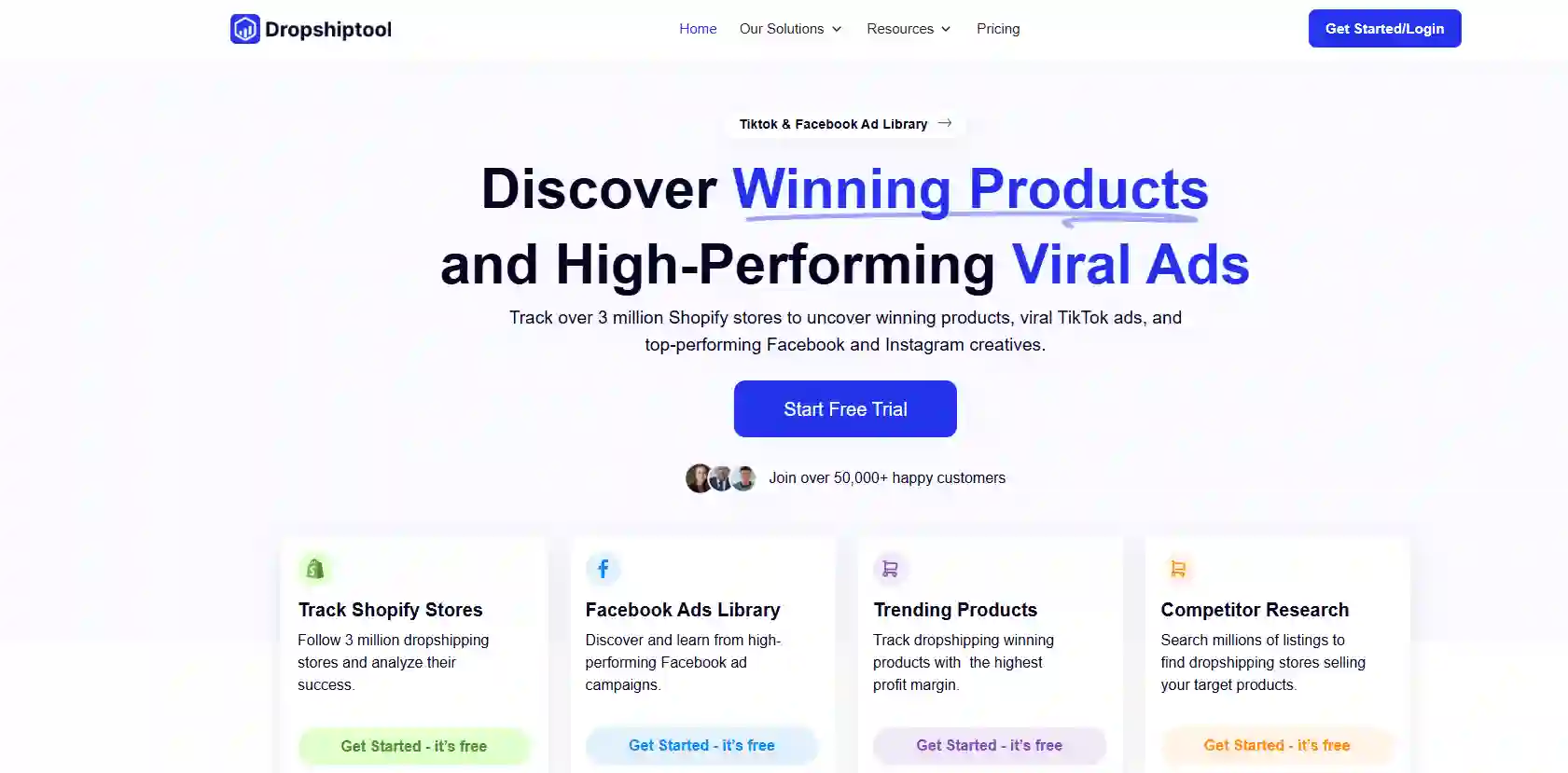
Dropshiptool is a research suite built around Shopify store data, ads, and curated product lists, all inside one interface. It is designed so you can trace products from real stores, see how they sell, and decide what is worth testing without jumping between multiple apps.
Inside the main dashboard, you move between an Ad Spy panel, a product database, a product portfolio, competitor research, and a sales tracker. Each area is tied to the same underlying store data, which lets you go from ad to product to revenue trends without rebuilding your search every time.
Dropshiptool Ad Spy Tool
The Ad Spy tool is the starting point when you want to see how products are being promoted on Facebook, Instagram, and TikTok. You can search across a large ad library, then filter by niche, engagement, performance, or region to see creatives that are currently driving attention in your space.
Once you find an ad that looks promising, you can open a detailed view that shows spend signals, reach, and audience demographics, along with a timeline of how the campaign has behaved over its run. This helps you spot patterns such as long‑running creatives, recent spikes, or ads that keep getting refreshed, which often indicates that the product behind them is still pulling sales.
Dropshiptool Product Database
The Product Database is built as a catalog of trending and higher‑margin items pulled from Shopify stores tracked by the platform. Each listing includes fields like price, supplier source, product creation date, and the number of stores currently selling it, plus sales performance indicators.
You can refine this catalog using advanced filters such as category, price range, supplier region, domain TLD, store currency, store language, and included or excluded title and description keywords. This makes it easier to line up products that match your store positioning, shipping preferences, and offer style instead of scrolling through random ideas.
Dropshiptool Product Portfolio
The Product Portfolio section takes a more curated approach by offering weekly drops of products that the team has hand‑picked based on performance and trend signals. These drops show which weeks certain products started moving and when they were highlighted, so you can pair your own launch timing with how the market evolved.
If you prefer a pipeline style workflow, you can use the portfolio as a regular source of test candidates, then move shortlisted items into your own “My Portfolio” view to track what you have already launched or plan to launch soon.
Dropshiptool Competitor Research
The competitor research tool is where Dropshiptool leans into store‑level analysis. You can track a large number of Shopify stores, see what new products they add, and view how their catalogs change over time.
From this view, you can check which products are appearing in multiple stores, whether certain shops are adding new items aggressively, and how long individual products stay in their lineups. When a store keeps a product live while continuing to invest in ads, that is a strong signal that the underlying offer and system are working, even if you do not know the exact revenue numbers.
Dropshiptool Sales Tracker
The Sales Tracker connects competitor research back to performance by estimating store revenue and showing daily sales patterns for tracked products and shops. You see graphs for sales volume, growth trends, and top products across the stores you follow, which helps you avoid guessing based only on ad activity.
This view is useful for validating whether a product from the database or portfolio is backed by sustained store sales rather than just a few flashy creatives. It also gives you a way to monitor how markets evolve over weeks and months once you have committed to tracking specific stores.
What Is WinningHunter?
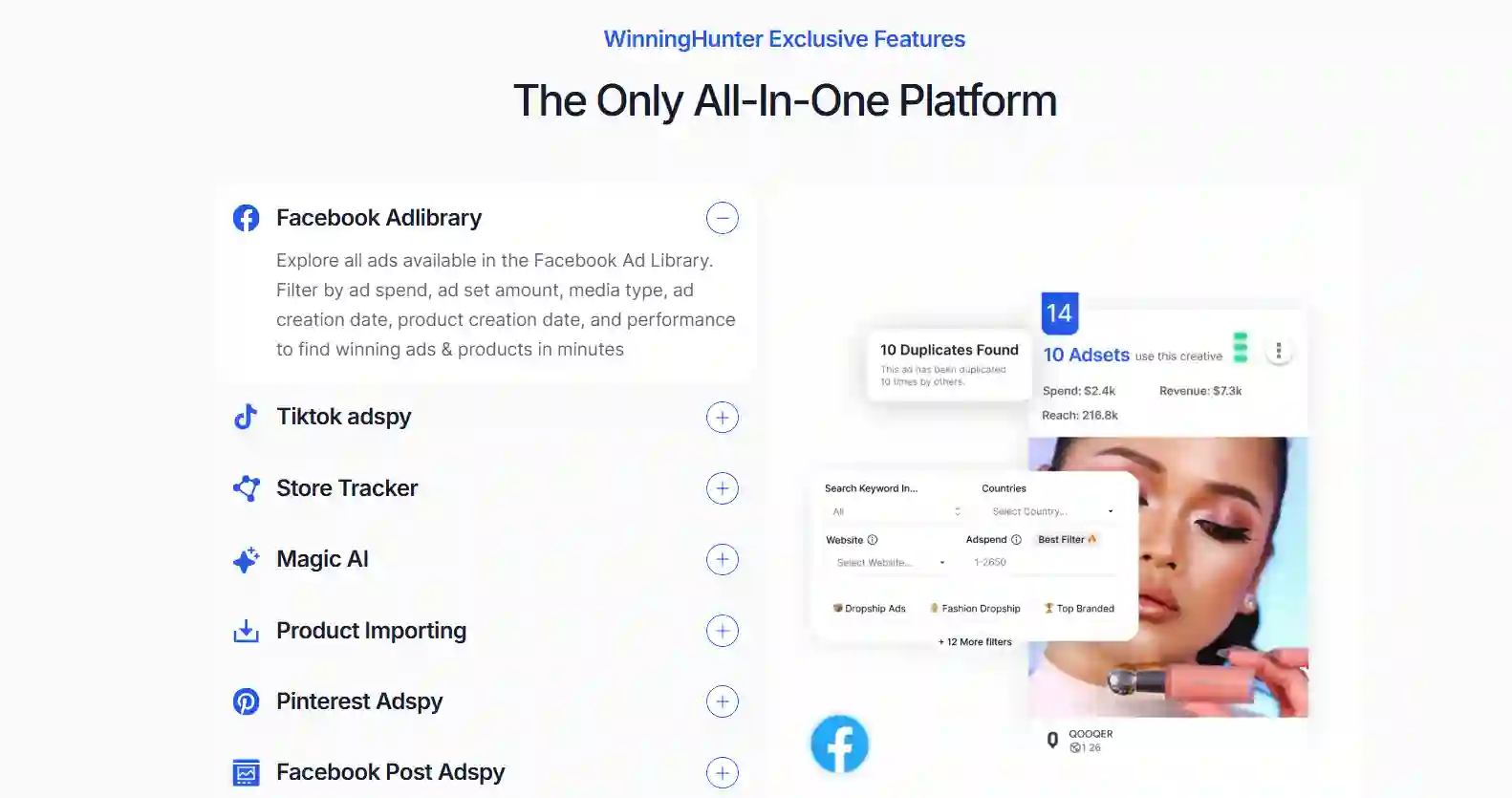
WinningHunter is framed as a live product research tool that revolves around ad and store signals instead of just catalog data. In the transcript, the creator uses it to hunt for systems, not quick trends, by looking for businesses that have been running ads for a while to a small set of products.
The core idea in this workflow is to find validated systems: a product, a price, a set of ads, and a page layout that have been producing consistent results for months. WinningHunter surfaces stores and creatives that match these criteria, so the user can reverse‑engineer the system and rebuild a similar version for a new brand.
How WinningHunter Handles Live Product Research?
When the user opens WinningHunter, they often start without any filters so they can see fresh products and ads the platform has surfaced recently. The thinking is that the tool itself has already done the heavy lifting of going through millions of ad entries and pulling out relevant campaigns, so manual filters are less important at the beginning.
From there, the workflow involves scanning products and stores, ignoring broad fashion items with many variants, and prioritizing single‑product funnels that are easier to manage. The user looks for stores that run many ads to a small number of products, which usually indicates that they have finished the testing phase and locked in a working system.
WinningHunter Ad and Store Signals
Inside WinningHunter, each product or store entry shows how many ads are linked to it and how long those ads have been running. A business with hundreds or thousands of creatives for one main product is treated as a strong candidate to study because it suggests that the team has refined its funnel over a long period.
The workflow described in the transcript involves tracking stores from WinningHunter into Facebook’s ad library so you can see active and inactive campaigns in more detail. By looking at how many ads are live, how the creative style has evolved, and what hooks are being used, you get a clearer picture of how serious the advertiser is about that product.
Magic AI and Research Shortcuts in WinningHunter
WinningHunter includes features such as “Magic AI” that help surface hidden products and campaigns inside the software. While the transcript does not go deep into technical details, it shows that these AI‑powered searches are used as a second layer once basic browsing has already revealed interesting stores.
The user treats WinningHunter as a way to speed up the early stage of research, then relies on manual judgment to decide whether a business matches their requirement for simple funnels, clear single‑product offers, and problems that customers care about enough to buy repeatedly.
Dropshiptool vs WinningHunter: How Their Workflows Differ
Dropshiptool leans toward a structured view of stores, products, and ads, where you can bounce between product database entries, competitor catalogs, and estimated sales for a broad picture of a niche. This suits you if you want to see many options at once, rank them by signals such as store count and revenue trends, and then import products directly into your own store.
WinningHunter is used more like a live hunting tool where you sit inside the interface, scroll through ads and stores, and look for systems that can be cloned with care. Instead of treating every product as a quick test, the transcript’s workflow builds around identifying one or two proven funnels, copying their structure, and then branding and executing them with your own ads and pages.
Dropshiptool vs WinningHunter Features
If you look at feature sets side by side, Dropshiptool offers an integrated suite: Ad Spy, Product Database, Product Portfolio, Competitor Research, and Sales Tracker, all tied together by store and product tracking. This combination allows you to move from “interesting ad” to “underlying store and product performance” without leaving the platform.
WinningHunter centers its features on product discovery through ads, store tracking, and proprietary ways of estimating activity. Rather than providing full revenue dashboards, it focuses on signals like the number of ads, how long campaigns have been running, and how stores structure their funnels, which the user then turns into a system they can copy.
Dropshiptool vs WinningHunter Pricing
Dropshiptool’s pricing is presented in tiered plans, starting with a Starter plan that activates after a trial and then stepping into Professional, Empire, and Unicorn tiers. Each tier increases daily search limits for the product database and competitor research, expands Ad Spy credits, and raises caps on portfolio products, tracked stores, and tracked products.
On the Dropshiptool site, you can choose between monthly and annual billing, with annual pricing offering lower effective monthly rates and clearly listed feature counts for each tier. This makes it easier to decide how many daily searches and tracked items you actually need based on how aggressively you plan to test products.
WinningHunter, in the transcript, is described as having free access options and paid plans that the creator strongly recommends once you are serious about testing. Exact pricing numbers are not listed in the notes, but the emphasis is on treating the paid plans as a worthwhile cost if you are going to use the tool actively for product and store hunting.
Dropshiptool vs WinningHunter Use Cases
You will appreciate Dropshiptool if you want a broad research toolbox tied to Shopify, where you can measure store behavior over time, see product portfolios, and check how revenue trends move across multiple shops. It is well suited to store owners who like seeing lots of data before choosing a product and who want a steady stream of curated ideas.
WinningHunter fits a more hands‑on, system‑oriented approach, where you spend time inside ad and store views, pick one or two businesses that match your taste, and then replicate their funnels carefully. This matches creators who prefer deep dives into fewer products, who are comfortable building longer story‑based ads, and who can invest in creative and editing work to match the campaigns they study.
Mistakes To Avoid With These Tools
Here are some mistakes to avoid when using Dropshiptool vs WinningHunter:
- Copying products without the system: If you grab a product from WinningHunter or Dropshiptool but ignore the way the original store priced, advertised, and structured its page, you are likely to see weak results even if the item looked strong in the database or ad library.
- Underestimating creative effort: The transcript highlights brands running long, story‑based video ads that took hours of editing and scripting. Treating those businesses as simple product plays and trying to compete with basic creatives can lead to wasted ad spend and the false belief that dropshipping is broken.
- Chasing complex catalogs too early: Stores with many variants, wide product ranges, and intricate operations are described as poor fits for beginners. If you select those systems from WinningHunter or similar data inside Dropshiptool, you may end up overwhelmed by returns, sizing questions, and ad management before you ever reach stable profit.
- Ignoring bans and policy risk: Health‑related products with heavy claims, x‑ray graphics, and strong medical angles can trigger account issues even when they look profitable in research tools. The notes stress that you should weigh policy risk and ease of approval, not just sales potential, before replicating such funnels.
Dropshiptool vs WinningHunter Review: Which One is Better?
As a research stack, Dropshiptool shines when you want a single interface to check ads, store catalogs, and sales trends while also importing products directly to Shopify. You get weekly portfolio drops to seed your pipeline and can follow how winning stores adjust their offerings over months, which helps you avoid late entries into fading trends.
WinningHunter stands out in the transcript as a way to build businesses around well‑tested systems, not one‑off viral products. By tracking stores with many ads to a small set of products and then replicating their quizzes, funnel structure, and ad angles, the user reports being able to launch multiple businesses that reach consistent four‑figure days.
If you want a wider view of the market and a steady inflow of ideas, Dropshiptool is likely better aligned with your workflow. If your strength lies in copying and upgrading proven funnels with high‑quality creative work, WinningHunter becomes more attractive, especially when paired with strong editing and storytelling skills.
How DropshipTool Can Help?
If you want niche ideas to test once you have a research tool in place, you can check out our best dropshipping business ideas.
You can also use the Product Database and Ad Spy Tool to see live screenshots of how those modules look before committing to a plan.
When you want to see how Dropshiptool handles ongoing store analysis, the Competitor Research and AI Sales Tracker solutions walk you through store tracking and sales views that feed your validation process.
For live theme analysis, the Shopify theme detector can help you understand which layouts winning stores are using so you can pick similar structures or avoid designs that do not fit your brand.
Conclusion
Dropshiptool gives you a steady way to pick ideas, check performance, and build a testing pipeline without leaving one dashboard. If your strength lies in spotting systems, copying funnels, and investing in strong creative work, WinningHunter matches that workflow and can become your main hunting ground for high‑potential products.
The right choice depends on whether you want broad catalog‑driven research or deep system‑first analysis, and whether your current skill set leans toward data interpretation or storytelling and editing. Try Dropshiptool today!