How to Dropship on Amazon With No Money (2026 Guide)

Can you dropship on Amazon without money? Almost. You can open an Individual seller account with no monthly fee and pay $0.99 only when an item sells, list products you don't own yet, and have a supplier ship them. But "no money" isn't quite true: Amazon needs a credit card on file, takes referral fees on every sale, and you'll usually pay your supplier before Amazon pays you. And Amazon's dropshipping policy rules out the easiest-looking shortcut, which is buying from another retailer and having them ship to your buyer. This guide gives you the honest version: what Amazon actually allows, what it costs at minimum, the lean ways to start, and the mistakes that get new accounts suspended.
Is Amazon dropshipping with no money actually possible?
You can start Amazon dropshipping with very little cash, but not with zero. Here's what you need on day one:
- A seller account. Amazon's registration asks for a government ID, a bank account, a chargeable credit card, a phone number and tax information. The card is charged for fees. You need one even on the free-to-join Individual plan.
- Products from a supplier who'll dropship under your name. That rules out a lot of sources (more on this below).
- Enough float to pay for the first orders. Your supplier charges you when you place the order. Amazon typically releases your sale money on a payout schedule, not instantly. If you sell five $30 items on the first weekend, you need maybe $100 to $120 to buy them from the supplier before Amazon pays you.
So the realistic starting budget is "a credit card and around $100 of float", not literally nothing. That's still far cheaper than buying stock for FBA, which is why people search for it.
Amazon's dropshipping policy (read this first)
Amazon allows dropshipping, with conditions. Under Amazon's drop shipping policy, you must:
- Be the seller of record of your products.
- Identify yourself as the seller on all packing slips, invoices, external packaging and other information included with the order.
- Remove any packing slips, invoices or other information that identify a third-party dropshipper before the order ships.
- Be responsible for accepting and processing customer returns.
- Comply with all other terms of your seller agreement and Amazon policies.
What's prohibited: buying products from another online retailer and having that retailer ship directly to your customer, if the shipment doesn't show you as the seller of record or if anyone else (including the other retailer) appears on the packing slip, invoice or packaging.
In plain terms, you can't list a Walmart or Target item on Amazon at a markup and then order it from Walmart with your buyer's address when it sells. The buyer gets a box with Walmart's branding, files a complaint, and you're the one Amazon acts against. You also can't buy from Amazon itself and ship to an Amazon customer under your name. Sellers who try it tend to find out the hard way, usually through a suspension notice.
The legitimate version is working with a dropship supplier or wholesaler who ships blind (no branding, or your branding), puts your business name on the packing slip, and gives you tracking you can upload to Seller Central.
The real minimum costs to dropship on Amazon
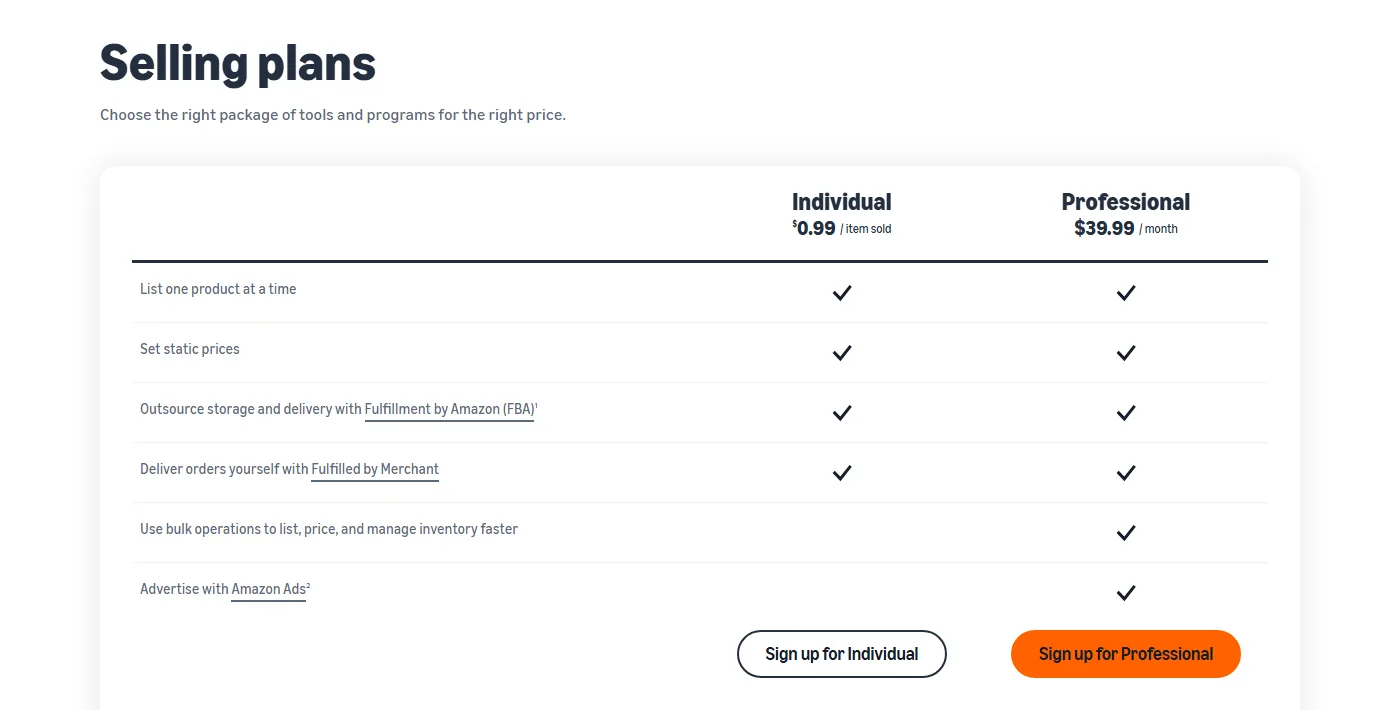
Amazon has two selling plans. Pricing below is from Amazon's selling fees page as of October 2026.
| Cost | Individual plan | Professional plan |
|---|---|---|
| Plan fee | $0.99 per item sold | $39.99 per month |
| Referral fee | Category percentage of the sale price (with a minimum, usually $0.30) | Same |
| Amazon Ads (Sponsored Products) | Not available | Available |
| Bulk listing and inventory tools | No | Yes |
| Best for | Fewer than about 40 sales a month | 40+ sales a month, or you need ads |
The breakeven is simple math: $39.99 divided by $0.99 is about 40. Below 40 sales a month the Individual plan is cheaper. Above it, Professional wins, and it also opens up advertising, bulk tools and Amazon's new-seller incentives.
A worked example
Say you sell a silicone kitchen utensil set for $24.99 on the Individual plan, fulfilled by your supplier (FBM).
- Referral fee at 15%: $3.75
- Individual plan per-item fee: $0.99
- Supplier cost including shipping to the US buyer: $13.50
You keep $24.99 minus $18.24, which is $6.75 per sale before returns, chargebacks and any income tax. At 25 sales a month that's about $169. Not a business yet, but it's real, and you spent almost nothing to find out whether the product sells. Check the exact referral rate for your category before you list, since rates differ by category and some go well above 15%.
Ways to start on Amazon lean
Classic product dropshipping isn't the only way to earn from Amazon without buying inventory. Here are the realistic low-cost routes, from closest-to-dropshipping to furthest.
1. Individual plan + FBM with a compliant dropship supplier
This is true dropshipping. You list products, the supplier ships under your name, you upload tracking. The hard part is the supplier. You need one who can ship to US buyers inside Amazon's delivery expectations, puts your name on the slip, and lets you handle returns. US-warehouse suppliers make this far easier than slow overseas shipping. Spocket, our sister company, lists US and EU suppliers with branded invoicing, and our guide to US-based dropshipping suppliers covers more options.
Watch out for listing restrictions. Many categories and brands are gated and need approval, and listing a branded product you're not authorized to sell is a quick way to get flagged. Unbranded or private-label-ready products are safer.
2. Merch on Demand (print on demand by Amazon)
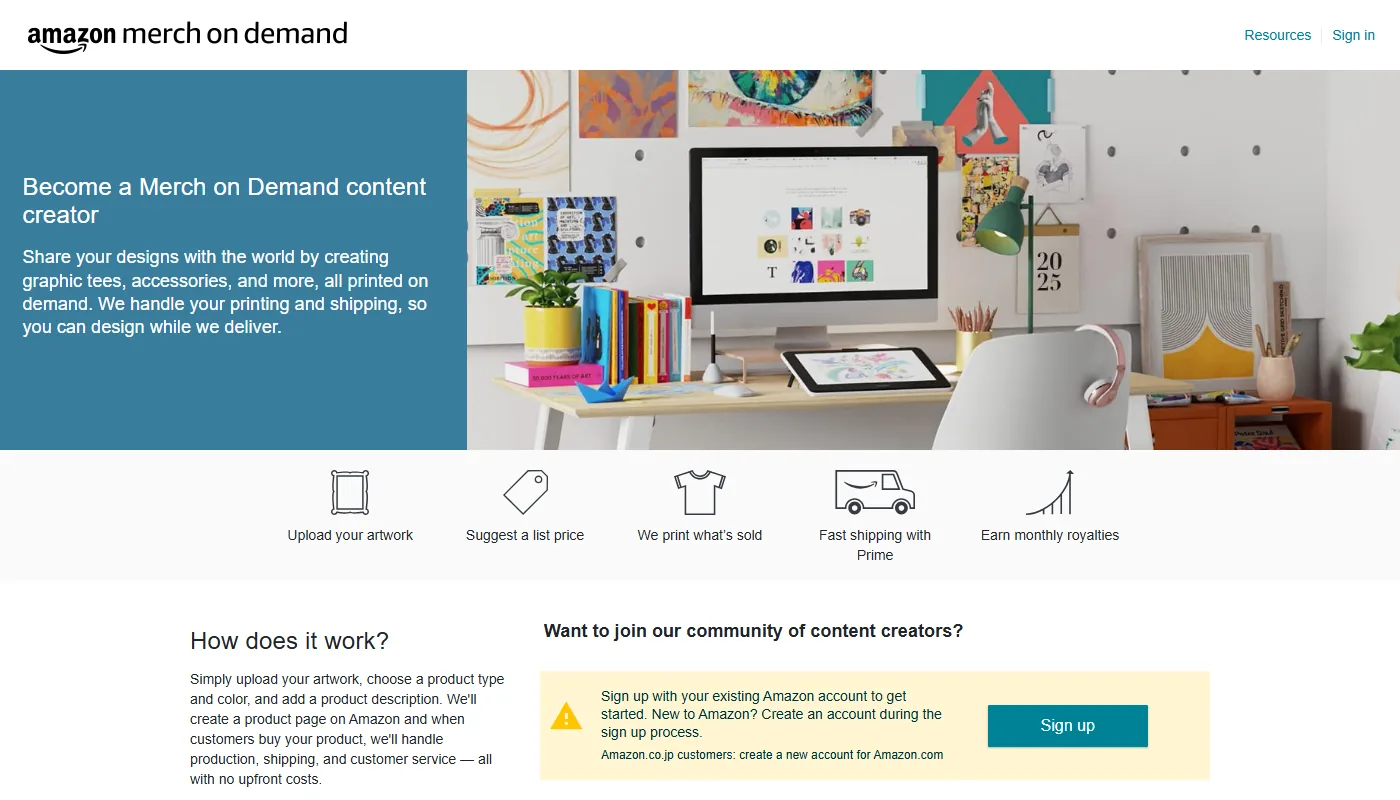
If you can make designs, Amazon Merch on Demand is the closest thing to dropshipping with genuinely no upfront cost. You upload artwork, pick products like t-shirts, hoodies and accessories, and suggest a list price. Amazon prints each item when it sells, ships it with Prime, handles customer service, and pays you a monthly royalty.
The trade-off: you sign up and wait for Amazon to approve you, new accounts start with a small number of design slots, and royalties per shirt are modest. You also can't use trademarked phrases or characters. Expect to upload a lot of designs before a few start selling. Our list of the most profitable print-on-demand products helps with what to design for.
3. Kindle Direct Publishing (KDP)
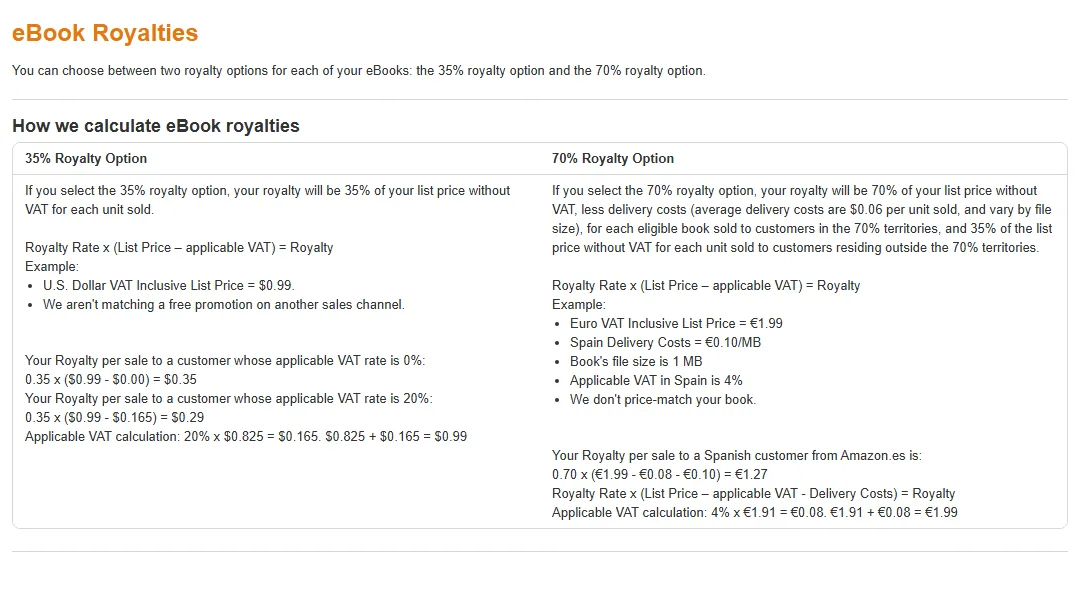
KDP lets you publish ebooks and paperbacks for free. Amazon prints paperbacks on demand, so there's no stock. For ebooks, KDP's royalty page offers two options: 35% of the list price, or 70% (minus small delivery costs) for eligible books sold into Amazon's 70% territories.
Low-content books (journals, planners, logbooks) were the gold rush a few years ago and are now crowded. Practical niche guides and well-designed workbooks still sell. It's slow to build but costs nothing except your time.
4. Amazon Associates and the Influencer Program
Not selling at all, but zero-cost and Amazon-powered. The Amazon Associates program pays up to 10% commission on qualifying purchases made through your links, depending on category. You need a website, app or social channel that meets Amazon's eligibility rules. The Amazon Influencer Program is the social-first version, giving creators a storefront page on Amazon. If you already have an audience (a TikTok account reviewing kitchen gadgets, say), this is the cheapest way to earn from Amazon.
5. FBM with a print-on-demand partner
Some print-on-demand companies connect to Amazon Seller Central so you can sell your own designs on more products than Merch on Demand offers, with the POD company printing and shipping each order. You'll need a seller account (Individual works to start) and you carry the referral fees, but there's still no stock. Check our roundup of print-on-demand suppliers for which ones support Amazon.
| Method | Upfront cost | Who ships | Main catch |
|---|---|---|---|
| Individual plan + dropship supplier | Card on file, ~$100 float | Your supplier | Finding a compliant, fast supplier |
| Merch on Demand | $0 | Amazon | Approval wait, slow start |
| KDP | $0 | Amazon | Crowded niches, slow to build |
| Associates / Influencer | $0 | Amazon | You need an audience |
| FBM + POD partner | Card on file | POD company | Thin margins on apparel |
How to dropship on Amazon without money: step by step
- Pick a product category you can sell without approval. Home and kitchen, pet accessories, and fitness accessories are common starting points. Avoid gated categories and brand names you're not authorized to sell.
- Research demand before you choose a product. Look at Best Sellers rankings, review counts and how many sellers share each listing. Free and paid tools both help, and we compared them in our guide to Amazon product research tools. Products that already sell well on Shopify stores and in social ads often have room on Amazon too.
- Line up a compliant supplier. Ask three questions before anything else: Will you ship with my business name on the packing slip and no other branding? What's your handling time and delivery time to US addresses? How do returns work? If any answer is vague, move on.
- Register on the Individual plan. You'll need your ID, bank details, card and tax info. Verification can take anywhere from a day to a couple of weeks.
- Create listings. If the product already exists on Amazon, you add your offer to the existing listing (and compete for the Buy Box on price and performance). If it doesn't, you create a new listing with your own photos and copy. Use the supplier's specs, but write your own description.
- Set honest handling and shipping times. Amazon judges you on late shipments and valid tracking. Promise what your supplier can actually deliver.
- Fulfill each order fast. When an order comes in, place it with the supplier the same day, then upload the tracking number in Seller Central as soon as you have it.
- Handle messages and returns yourself. Amazon expects replies to buyer messages within 24 hours. You process returns and refunds, even if the supplier won't take the item back.
- Upgrade to Professional once you pass about 40 sales a month, or sooner if you want to run Sponsored Products ads.
Want a shortcut on step 2? Dropshiptool's Sales Tracker and Ad Spy show which products are selling on Shopify stores and getting ad spend right now, which is a decent early read on what will move on Amazon. You can try Dropshiptool while you set up your seller account.
Risks of Amazon dropshipping on a zero budget
Starting cheap is fine. Starting careless is what kills accounts. The common failure points:
- Account health metrics. Amazon watches order defect rate (target under 1%), late shipment rate (under 4%), pre-fulfillment cancel rate (under 2.5%) and valid tracking rate (above 95%). Slow overseas suppliers and stock-outs push these the wrong way quickly.
- Supplier stock-outs. If your supplier sells out and you cancel, it counts against you. Keep listed quantities low and check stock daily.
- Cash flow squeeze. You pay the supplier now, Amazon pays you later. A good weekend can drain a small card limit. Know your float before you scale.
- Returns you can't send back. Many overseas suppliers don't accept returns. You still have to refund the buyer. Build a refund allowance into your price from day one, and make it bigger for apparel and electronics, where returns run highest.
- Price competition. If you sell on an existing listing, other sellers can undercut you overnight. Unique bundles or your own listings help.
- Policy drift. Amazon updates its rules. Read your Account Health page weekly, not only when something goes wrong.
Taxes come with any of these models once you're earning. Our dropshipping taxes guide covers the basics for new sellers.
Amazon vs your own store when you have no money
Amazon gives you traffic on day one, which is the big draw when you can't afford ads. The trade-off is control: Amazon sets the rules, owns the customer relationship, and takes a referral fee on every sale. A Shopify store costs a monthly subscription and you have to bring your own traffic, but you keep the customer and set your own policies. Plenty of sellers run both. If you're weighing the options, we cover how to start dropshipping for free on other channels, and the broader list of ways to make money with Amazon if selling physical products isn't for you.
The bottom line
You can dropship on Amazon with almost no money if you play it straight: start on the Individual plan, use a supplier that ships under your name, set realistic delivery times, and keep enough float to pay for the first orders. If you don't have a supplier yet, Merch on Demand, KDP and Associates let you earn from Amazon with genuinely zero upfront cost while you learn. What you can't do is the retailer-to-retailer shortcut. Amazon prohibits it and enforces it.
Find a product with real demand before you spend anything. Start with Dropshiptool to see what's selling right now, then test it on Amazon.