Dropshipping Fulfillment Services: 3PL vs Dropship Guide (2026)

Dropshipping fulfillment services are the companies that store, pack and ship orders so you don't have to. In pure dropshipping, that's your supplier (CJdropshipping, a Spocket supplier, an AliExpress seller). Once you hold your own inventory, it's a third-party logistics company (3PL) like ShipBob, ShipMonk or Amazon Multi-Channel Fulfillment. This guide covers how each model works, what ecommerce fulfillment services actually cost in 2026, which providers fit which stage, and the point where moving from dropshipping to a 3PL starts making money instead of costing it.
What is ecommerce fulfillment?
Fulfillment is everything that happens between "order paid" and "parcel delivered." It breaks down into five jobs:
- Receiving: inventory arrives at a warehouse and gets counted and shelved.
- Storage: products sit on shelves, in bins or on pallets until they sell.
- Pick and pack: a worker (or robot) pulls the items for an order and packs them with dunnage, inserts and a label.
- Shipping: the parcel goes to a carrier such as USPS, UPS, DHL or a local postal service, and tracking is sent back to your store.
- Returns: the reverse trip, where items come back, get inspected, and are restocked or written off.
Who does these jobs, and who owns the stock while they happen, is the real difference between the three fulfillment models.
Dropshipping vs 3PL vs self-fulfillment
| Dropshipping | 3PL fulfillment | Self-fulfillment | |
|---|---|---|---|
| Who owns inventory | The supplier | You | You |
| Upfront cost | None | Inventory + setup + freight to warehouse | Inventory + packaging + space |
| Cost per order | Built into product price + shipping | Pick/pack + storage + shipping | Your time + postage + materials |
| Delivery speed | Depends on supplier location (days to weeks) | Usually 2–5 days domestic | As fast as you can ship |
| Branding control | Limited (some suppliers offer custom packaging) | High | Full |
| Risk | Low cash risk, higher quality and delay risk | Dead stock if demand drops | Dead stock + it doesn't scale |
| Best for | Testing products, wide catalogs | Proven products with steady volume | Very early or handmade brands |
Most stores don't pick one forever. They test with dropshipping, move winners into a 3PL, and keep dropshipping the long tail. That's hybrid dropshipping, and it's where most profitable Shopify stores end up.
How dropshipping fulfillment works
- A customer orders on your Shopify store and pays your retail price.
- Your supplier app (CJ, Spocket, DSers, AliDrop and so on) pulls the order in automatically.
- You pay the supplier the product cost plus shipping, either manually or through auto-payment.
- The supplier picks, packs and ships the order directly to your customer, ideally with no supplier invoice or branding in the box.
- The tracking number syncs back to Shopify, which emails your customer.
You never touch the product. The trade-off is that you also don't control packing quality, dispatch time or what goes in the box. For the full order flow, including what happens when something breaks, see how dropshipping orders work.
How 3PL fulfillment works
With a 3PL, you buy inventory in bulk (usually from the same factory or agent you dropshipped from), ship it to the 3PL's warehouse, and connect the 3PL to Shopify. Orders route to the warehouse automatically, they pick and pack from your stock, and tracking flows back. You pay for receiving, storage, each order picked, packaging and postage.
The upside is speed and consistency. Your products sit a few hundred miles from most customers, so a 2 to 5 day domestic delivery is normal. You can also add custom boxes, inserts and samples, because it's your stock.
How much do ecommerce fulfillment services cost?
3PLs rarely publish full rate cards. ShipBob and ShipMonk both price by quote. The best public benchmark we found is Fulfill.com's 2026 pricing data, based on The Fulfillment Advisor's 2025 survey of more than 600 warehouses:
| Fee | Survey average | Typical range |
|---|---|---|
| Pick and pack, first item (B2C) | $3.20 per order | $2–$3 (published rate cards $0.99–$2.00) |
| Each additional item | $0.48 | $0.30–$0.75 |
| Pallet storage | $20.17 per month | $15–$40, most $18–$25 |
| Bin storage | $3.08 per month | $1–$5 |
| Receiving | $10.52 per pallet | $5–$15 per pallet |
| Setup / onboarding | $333–$425 | $250–$1,000+ (about half of warehouses charge it) |
| Monthly minimum | $517 | $0–$750 |
| Returns processing | $4.06 per return | $1–$7 |
Two numbers in that data deserve attention. Monthly minimums averaged $517, up from $337.50 in 2024, so a 3PL can cost you money even in a slow month. And 48.6% of warehouses now charge long-term storage surcharges, up from 23.3%. Slow-moving stock gets expensive fast.
Worked example: 300 orders a month
Say you sell a single-item product, 300 orders a month, and keep two pallets of stock at a 3PL.
- Pick and pack: 300 × $3.20 = $960
- Storage: 2 pallets × $20 = $40
- Receiving one restock pallet a month: about $10
- Total fulfillment before postage: about $1,010, or roughly $3.37 per order
Now compare. If your dropshipping supplier charges $9.50 product cost plus $5.00 shipping ($14.50 landed) and the factory sells the same item in bulk for $4.20, with freight to the US adding about $1.10 a unit, your 3PL landed cost is $4.20 + $1.10 + $3.37 + roughly $5.50 domestic postage = $14.17. Nearly the same cost, but delivery drops from two weeks to three days, which usually lifts conversion and cuts refunds. These numbers are illustrative; plug in your own quotes. Our breakdown of the real cost of running a dropshipping business has more line items to include.
The best dropshipping fulfillment services in 2026
Dropshipping-side fulfillment (no inventory)
CJdropshipping. CJ fulfills straight from its catalog, mostly from China, and also runs warehouses in the US, UK and Germany where you can pre-stock popular items. Its app copy quotes general local warehouse delivery of 2 to 3 days. Warehouse use adds inbound, stocking and outbound fees. It's a natural first step toward a 3PL because you can move a winner into a CJ US warehouse without signing a separate contract. Full details in our CJ Dropshipping review.
Spocket's suppliers. Spocket doesn't run warehouses. Its suppliers, mainly in the US and Europe, ship from their own stock, so domestic delivery is fast without you buying inventory. You pay higher unit costs in exchange. Good for stores that want speed before they're ready to hold stock.
Zendrop. Zendrop pairs a dropshipping catalog with custom packaging and its own 3PL option, so you can stay in one app as you shift from dropshipping to stocked inventory. Paid plans start at $29 a month.
For a full list of supplier apps, see our guide to dropshipping suppliers for Shopify.
3PL fulfillment (you own the inventory)
ShipBob. Founded in 2014, ShipBob says on its about page that it operates 50+ fulfillment centers, has fulfilled 300M+ orders and runs at a 99.97% order accuracy rate (its own figure). Locations span the US, Canada, the UK, Europe and Australia. Standard packaging is included and pricing is by quote. A strong default for Shopify brands doing a few hundred orders a month or more.
ShipMonk. Fulfillment centers across North America and Europe, aimed at growing and high-volume brands. Pricing is by quote, and its pricing page explains the monthly minimum: your monthly order volume times your first-item pick fee, minus 20%. Ask for that number in writing before you sign.
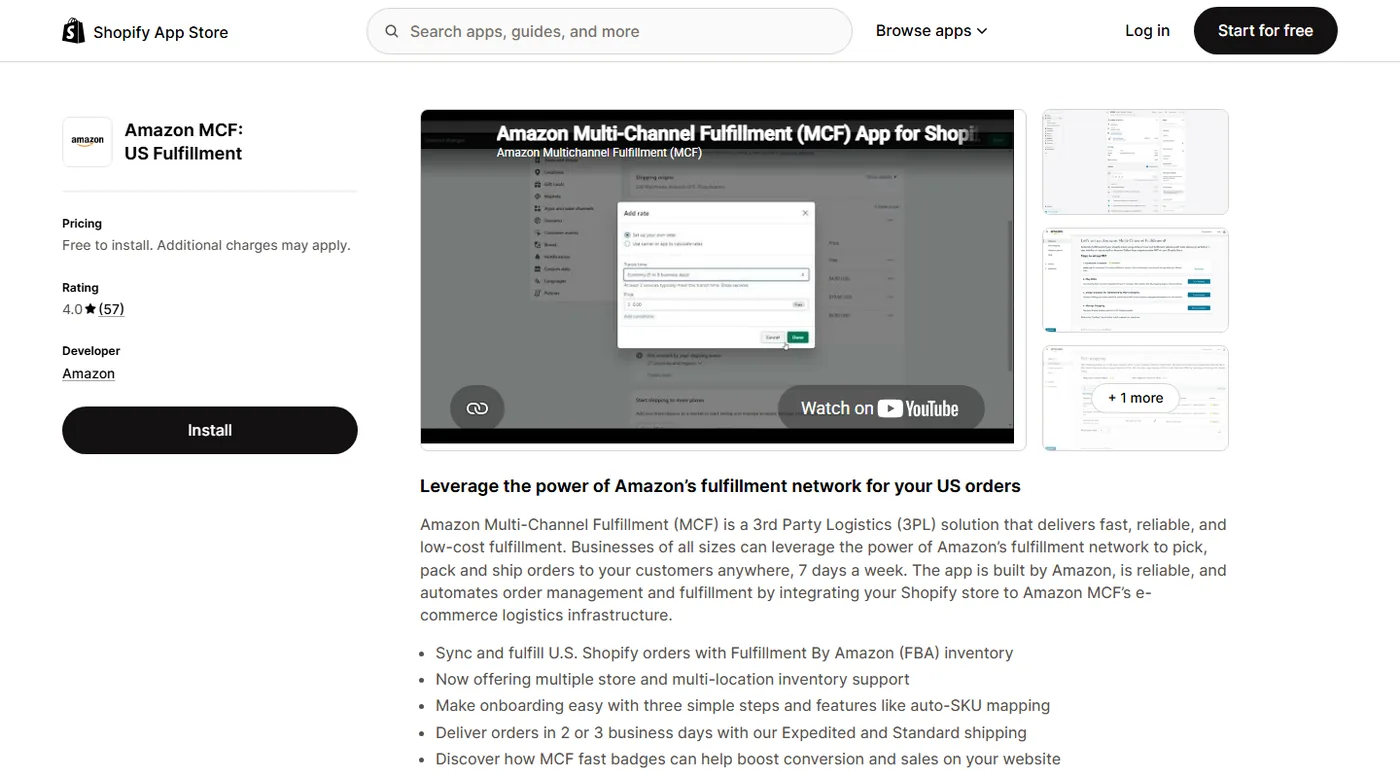
Amazon Multi-Channel Fulfillment (MCF). Uses Amazon's fulfillment network to ship orders from your Shopify store, even if you don't sell on Amazon. The official "Amazon MCF: US Fulfillment" app is free to install, and the listing promises delivery in 2 or 3 business days on Expedited and Standard shipping. According to Amazon's Shopify integration page, orders ship in unbranded packaging at no extra cost. Amazon raised MCF fees on 15 January 2026, with single-unit orders taking the biggest increase, so price your margins on current rates.
Shopify Fulfillment Network (SFN) in 2026. This one confuses people. Shopify sold its logistics business, including Deliverr, to Flexport in 2023, taking a 13% stake in Flexport in return, as FreightWaves reported. SFN still exists, but Shopify's help center now describes it as an app that connects you with third-party logistics partners who store and ship your inventory. In other words, it's a gateway to partner 3PLs (Flexport is the main one), not a warehouse network Shopify runs itself. Check partner minimums and supported countries before you assume it's the cheapest route.
How to choose a fulfillment service
Ask every provider these questions, and get the answers in writing:
- What's your order accuracy rate, and how do you credit errors? Look for 99%+ and a clear policy for mis-picks.
- What are your size and weight limits? Many providers start charging extra, or decline, past about 50 lb. Matters for fitness gear and furniture.
- Is there a monthly minimum or setup fee? And what happens in a slow month?
- Where are your warehouses? Match them to where your customers are. Two coasts beats one central warehouse for US-wide delivery.
- Which carriers do you use? Multiple carriers mean one carrier's delays don't stop your shipments.
- Does it connect natively to Shopify? Orders, inventory and tracking should sync without spreadsheets.
- How do returns work? Who inspects, who restocks, what's the fee? Pair it with a clear returns and refunds policy.
- Can you handle my SKU count? One shirt in five sizes and ten colors is 50 SKUs. Some small 3PLs struggle past a few hundred.
When to switch from dropshipping to a 3PL
This is the angle most fulfillment guides skip, and it's the one that matters most to a dropshipper. Moving too early locks cash into stock you might not sell. Moving too late leaves money and reviews on the table. Use these signals:
- Steady volume. A product has sold 10+ orders a day for at least three or four weeks, not just one viral week.
- Shipping is your top complaint. "Where is my order" tickets and refund requests point to delivery time.
- The landed-cost math works. Bulk unit cost + freight + 3PL fees + domestic postage is equal to or lower than your dropshipping landed cost (see the worked example above).
- Demand looks durable. Competitor stores selling the same product are still growing, not fading.
- You can fund 30 to 60 days of stock without starving your ad budget.
Start small. Send one or two SKUs, 30 to 45 days of sales, to a single warehouse. Keep the dropshipping supplier live as backup so a stockout doesn't kill your ads.
Use sales data to decide what to stock
Signal number four is where Dropshiptool comes in. Before you commit a few thousand dollars to inventory, open the Sales Tracker and check how competing Shopify stores selling the same product are trending. Rising daily sales across several stores is a green light. One store spiking while everyone else flatlines is a warning. Our guide on predicting product longevity with sales data shows how to read those curves.
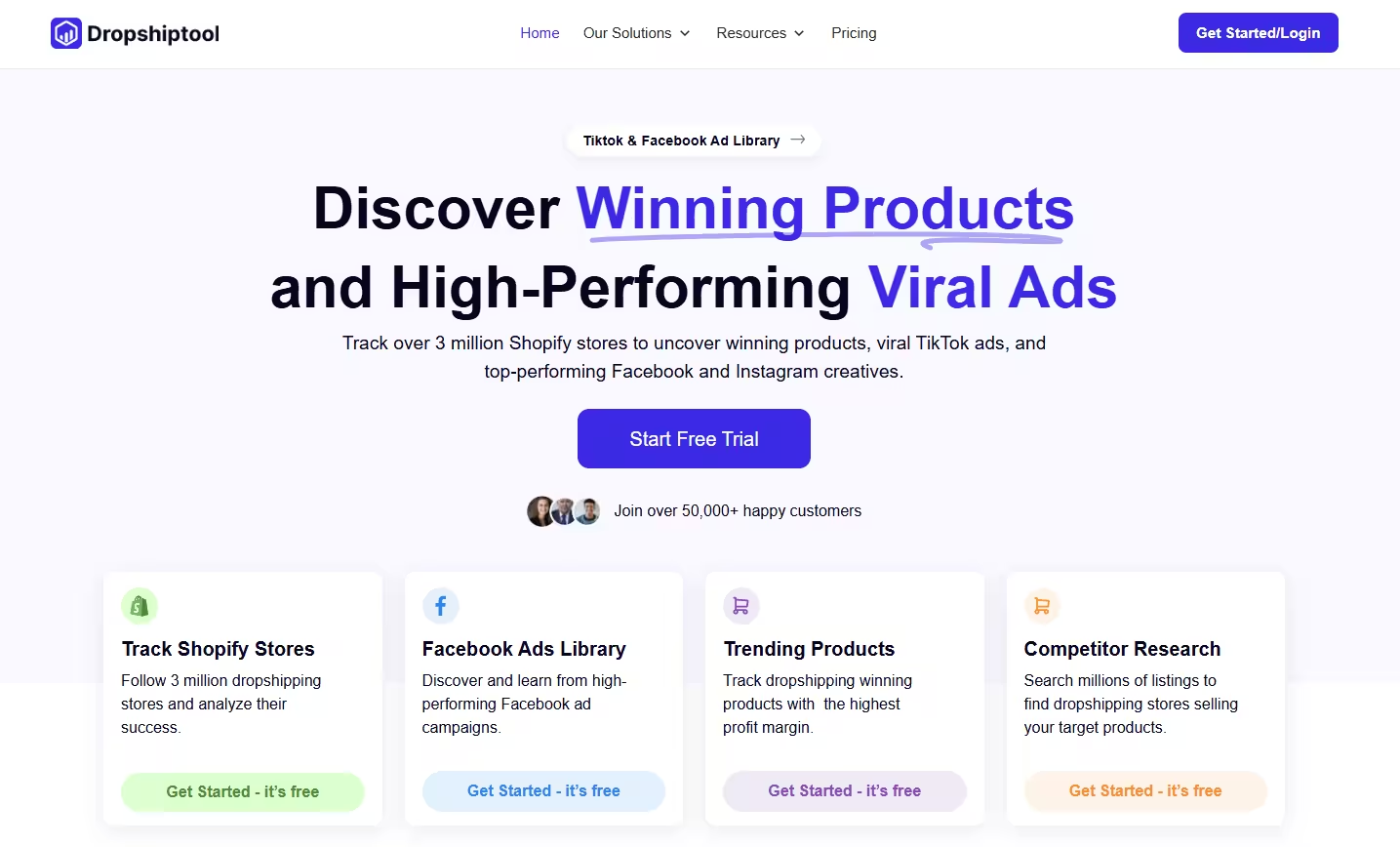
It also helps with quantity. If the stores you track are each moving around 40 units a day and still climbing, a 45-day starter order is easier to justify. Try Dropshiptool free and check a product before you place your first bulk order.
Branded packaging: when it's worth paying for
Custom packaging is one of the main reasons sellers move to a 3PL or to a supplier like CJ or Zendrop. It isn't always worth it.
- Worth it: products with repeat purchase (skincare, supplements, pet consumables), gifts, and anything over about $50 where the unboxing shapes reviews.
- Not yet: one-off gadgets you're still testing. A plain mailer and a printed insert card get you 80% of the effect for pennies.
Budget for minimum order quantities and storage. ShipBob, for example, says custom packaging costs you only its storage fee, but you still pay to produce the boxes. Order packaging once a product is proven, not on day one.
Common fulfillment mistakes
- Sending six months of stock on the first order. Start with 30 to 45 days.
- Ignoring dimensional weight. A light product in an oversized box is billed by size, not weight.
- Forgetting freight and duties when comparing 3PL costs to dropshipping costs.
- Turning off the dropshipping supplier the day stock lands at the 3PL. Keep it as a fallback.
- Not reading the long-term storage terms. Nearly half of warehouses now charge surcharges on aged stock.
Pick the fulfillment model that fits your stage
Start with dropshipping fulfillment while you test. Move proven products to local stock through CJ's warehouses or a 3PL like ShipBob, ShipMonk or Amazon MCF once volume is steady and the landed-cost math works. Keep everything else dropshipped. Decide with data, not gut feel, and you'll avoid both slow shipping and dead stock.
Want to know which products deserve a pallet? Start free with Dropshiptool and see what's selling on Shopify right now.