Top Amazon Product Research Tools

Finding profitable products on Amazon isn’t about guesswork anymore—it’s about using the right data. That’s where Amazon product research tools come in. Whether you're launching your first store or scaling an existing one, these tools help you identify high-demand products, analyze competition, and validate ideas before investing your time and money. Instead of relying on trends alone, you can make informed decisions backed by real metrics like sales estimates, keyword demand, and pricing history. In this guide, we’ll break down the top Amazon product research tools that sellers actually use to discover winning products, reduce risk, and stay ahead in a competitive marketplace. If your goal is to build a profitable Amazon business, this is where it starts.
What Are Amazon Product Research Tools?
Amazon product research tools help sellers spot products with real demand before they invest money in sourcing, listing, or ads. Instead of guessing what might sell, these tools pull signals like search demand, pricing patterns, competition, and estimated sales to help you make better product decisions.
For readers comparing options, the real value is simple: they help you find profitable products faster, reduce risk, and validate ideas with data. Sellers can use search, purchase, review, and pricing data to evaluate new product opportunities.
Why Product Research Is Critical for Amazon Sellers
Launching without research is one of the fastest ways to waste time and budget. Good research helps you answer the questions that matter before you commit.
- Avoid failed product launches: You can check whether people are already buying in that niche before you place an order.
- Identify demand vs competition: A product may be popular, but still be a poor choice if the niche is overcrowded.
- Make data-driven decisions: Instead of following hype, you can compare search demand, pricing, and sales trends across similar listings.
Amazon also frames product discovery around understanding customer demand and unmet needs, not just picking random trending items.
A practical way to think about it: the best tools for Amazon product research reduce guesswork. They help you understand whether a product has room to grow, whether the price point makes sense, and whether you can compete profitably.
How Amazon Product Research Tools Work
At a basic level, these tools collect and organize marketplace signals so sellers can judge whether a product idea is worth pursuing. Some tools are focused only on keywords or price history, while others combine product research, listing insights, and competitor tracking in one dashboard.
Amazon’s own research tools highlight four core signals—search trends, purchases, reviews, and pricing—which is exactly why product research is more than just checking what looks popular today.
Key Data Points These Tools Analyze
Most product research tools are built around a few key metrics:
- Sales estimates: Gives you a rough idea of how many units similar products may be selling.
- Best Sellers Rank (BSR): Amazon says BSR is based on sales volume data, which makes it a useful demand signal when read in context.
- Keyword search volume: Helps you understand whether shoppers are actively searching for that product type.
- Pricing trends: Useful for spotting unstable pricing, discount-heavy niches, or thin margins.
- Competition levels: Shows how crowded a niche is and how strong the top listings are.
For keyword-side validation, Amazon Ads search term reports can help sellers identify high-performing customer searches, which is valuable when judging search demand and buyer intent.
Types of Product Research Tools
Not every seller needs the same kind of tool. The right choice depends on what you want to validate.
- All-in-one tools: Platforms like Helium 10 or Jungle Scout combine product, keyword, and competitor research in one place.
- Keyword tools: Best when your main goal is understanding search demand and listing opportunities.
- Price tracking tools: Useful for checking price stability and seasonal fluctuations.
- Trend tools: Good for identifying product momentum before a niche gets too crowded.
For most beginners, all-in-one tools are easier because they reduce tool switching and give a fuller picture of product viability.
Key Features to Look for in Amazon Product Research Tools
The best Amazon product research tool is not the one with the most features. It is the one that helps you quickly answer three questions: Is there demand? Can I compete? Can I make money?
Product Database Access
A strong product database helps you filter by category, price, revenue, reviews, or demand signals. This makes it easier to move from broad niches to product ideas you can actually validate.
Sales and Revenue Estimates
This is one of the most important features because it helps you size the opportunity. Still, be careful: third-party tools usually provide estimates, not Amazon’s exact internal sales data. Amazon’s own tools and marketplace signals can help validate those estimates.
Keyword Research and SEO Tools
Good keyword data helps you understand:
- what shoppers type into Amazon
- which search terms bring traffic
- where listing opportunities exist
Amazon Ads documentation confirms that search term reports show the searches that generated ad clicks, which can reveal useful demand patterns.
Competitor Analysis
A useful tool should let you study top listings quickly:
- review count
- pricing
- listing quality
- brand strength
- niche saturation
This helps you avoid entering markets where demand exists, but competition is too strong for a new seller.
Trend Tracking and Historical Data
Historical data matters because one good month does not mean long-term demand. Trend tracking helps you separate:
- evergreen demand
- seasonal spikes
- short-term hype
That can save you from chasing products that fade before you even launch.
Profit Calculation
This is where smart sellers filter ideas fast. A product may have strong demand, but once you factor in product cost, shipping, Amazon fees, ad spend, and returns, the margin may not be worth it.
A simple rule: never judge a product by demand alone. Judge it by demand + competition + margin.
Important: Not all product research tools show “real” Amazon data. Many rely on models and estimates, so the best approach is to compare multiple signals instead of trusting one metric blindly. Amazon’s own tools are especially useful for validating demand-side insights.
8 Best Amazon Product Research Tools (Detailed List)
This is where things get practical. Choosing the right Amazon product research tools can directly impact your success—because the tool you use determines how well you identify demand, competition, and profitability. Below are the most trusted tools used by real sellers, broken down in a way that helps you decide quickly.
1. Helium 10 (Best All-in-One Tool)
Helium 10 is a full-suite platform built for serious Amazon sellers who want everything in one place—from product discovery to keyword research and listing optimization. It’s widely used by advanced sellers because it combines deep data insights with automation tools to scale efficiently.

Key Features
- Black Box → Product discovery database
- Cerebro → Reverse ASIN keyword research
- Xray (Chrome Extension) → Product validation
- Keyword tracker + listing optimizer
- PPC & competitor tracking tools
Pros
- Most comprehensive feature set in the market
- Strong keyword + product research capabilities
- Free plan available
Cons
- Steep learning curve for beginners
- Can be expensive at higher tiers
Best For
- Advanced sellers, agencies, and scaling brands
Why it stands out: Helium 10 is known for combining product research + keyword intelligence + optimization, making it a complete growth system.
2. Jungle Scout (Best for Beginners)
Jungle Scout is one of the most beginner-friendly Amazon product research tools, designed to simplify product discovery and validation. It focuses heavily on ease of use and reliable data, making it a strong choice if you’re just starting out.
Key Features
- Large product database (millions of listings)
- Chrome extension for real-time insights
- Supplier database for sourcing products
- Sales estimator + opportunity finder
Pros
- Clean interface and easy to use
- Strong data accuracy
- Built-in supplier insights
Cons
- No free plan
- Fewer advanced automation features than Helium 10
Best For
- Beginners and intermediate sellers
Why it stands out: Jungle Scout offers the best balance of simplicity + accuracy, making it ideal if you want fast, reliable product validation.
3. SmartScout (Best for Market Intelligence)
SmartScout takes a different approach. Instead of just product-level research, it focuses on market-level insights, helping you understand entire categories, brands, and seller strategies across Amazon.

Key Features
- Market share and category breakdown
- Brand analytics and seller insights
- Advanced niche finder
- Multi-level data (category → product → seller)
Pros
- Unique “big picture” view of Amazon
- Excellent for competitor and brand analysis
- Great for scaling businesses
Cons
- Less focused on keyword research
- Not beginner-friendly
Best For
- Advanced sellers and brand builders
Why it stands out: SmartScout helps you analyze entire marketplaces, not just individual products—giving you a strategic edge.
4. AMZScout (Budget-Friendly Option)
AMZScout is a simple and affordable entry-level tool designed for sellers who want to test product ideas without investing heavily upfront. It covers the basics of product research and validation in an easy-to-use interface.
Key Features
- Chrome extension for product validation
- Product database and tracker
- Sales estimates and niche analysis
- Basic keyword insights
Pros
- Very affordable
- Easy to use for beginners
- Good for quick validation
Cons
- Limited advanced features
- Lower data accuracy compared to premium tools
- No advanced automation or PPC tools
Best For
- Beginners and budget-conscious sellers
Why it stands out: AMZScout is perfect if you want a low-cost way to learn product research before upgrading.
5. Viral Launch now Intellifox (Best for Product Discovery)
Viral Launch now Intellifox is a data-driven platform designed to help Amazon sellers discover profitable products, optimize listings, and scale with precision. It stands out for combining market intelligence, keyword tracking, and PPC automation into one ecosystem, making it ideal for sellers focused on launching and growing products strategically.
Key Features
- Market intelligence for demand, competition, and trends
- Keyword research with search volume insights
- Listing optimization + AI tools
- PPC automation (AdSprout)
- Competitor tracking and product discovery
Pros
- Strong product discovery and launch insights
- Built-in PPC automation tools
- Good data accuracy and historical tracking
Cons
- Interface can feel outdated
- Advanced features locked behind higher plans
Best For
- Sellers focused on product launches and scaling with ads
Why it stands out: Combines product research + keyword + PPC automation, making it strong for growth-focused sellers.
6. Keepa (Best Free Price Tracker)
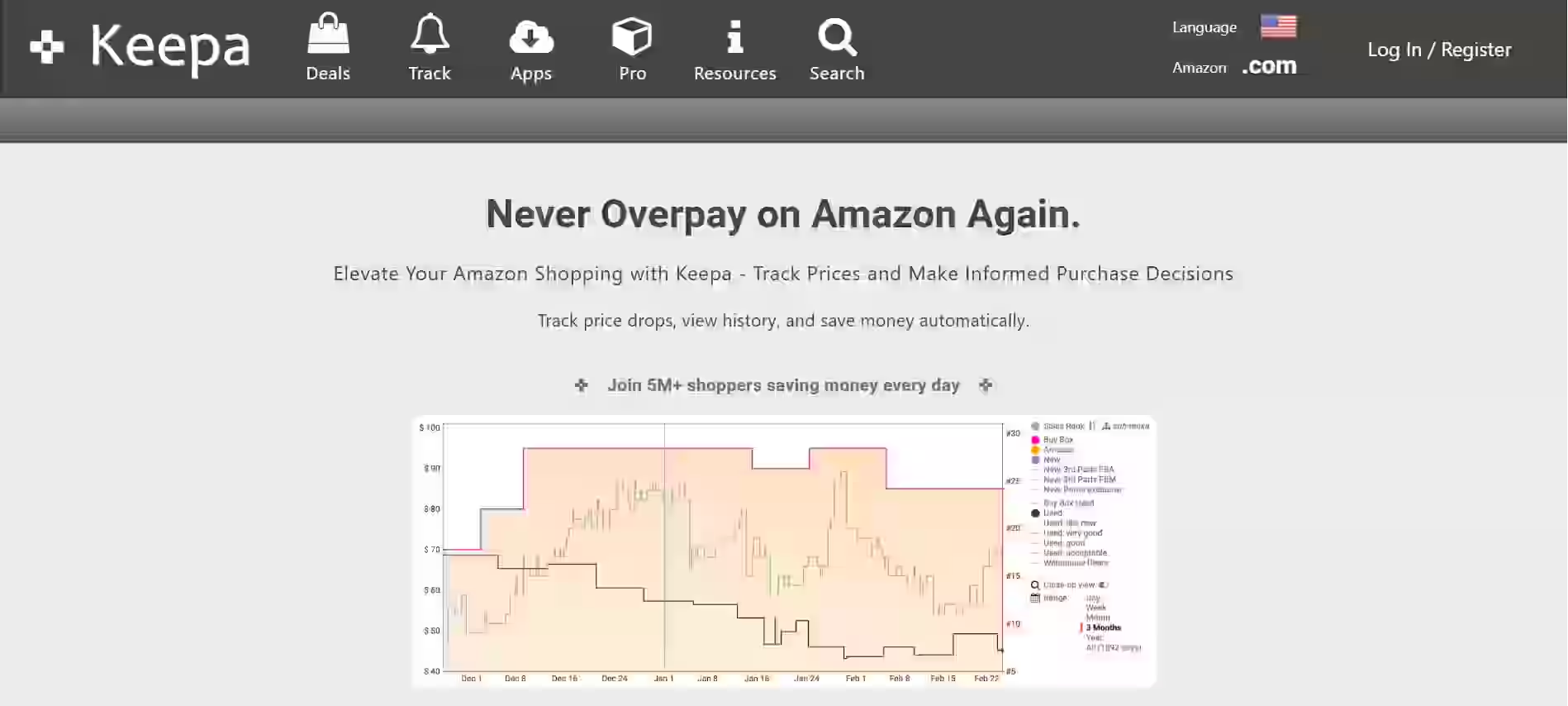
Keepa is one of the most widely used free Amazon product research tools for tracking price history and validating demand. Instead of estimating trends, it shows real historical price data, helping sellers understand how products behave over time.
Key Features
- Detailed price history charts
- Sales rank tracking (BSR trends)
- Alerts for price drops and stock changes
- Integration with Amazon product pages
Pros
- Free and highly reliable
- Excellent for demand validation
- Simple and easy to use
Cons
- No keyword research
- Limited product discovery features
Best For
- Beginners and sellers validating product demand
Why it stands out: Keepa helps you see real trends, not just estimates—critical for avoiding seasonal or unstable products.
7. MerchantWords (Best for Keyword Research)
MerchantWords focuses purely on Amazon keyword research, helping sellers understand what customers are actually searching for. It’s widely used for uncovering high-volume keywords and optimizing listings for visibility.
Key Features
- Search volume data for Amazon keywords
- Keyword trend analysis
- Long-tail keyword discovery
- International marketplace support
Pros
- Strong keyword database
- Easy to use
- Great for SEO-focused sellers
Cons
- No product research or competitor tools
- Limited all-in-one functionality
Best For
- Sellers focused on Amazon SEO and keyword optimization
Why it stands out: If your goal is ranking higher, MerchantWords gives you pure keyword insights without distractions.
8. SellerApp (Best for PPC + Analytics)
SellerApp is a growth-focused platform that combines product research, keyword tracking, and advertising analytics. It’s especially useful for sellers who want to improve visibility and scale through data-backed PPC strategies.
Key Features
- Keyword tracking and SEO tools
- Listing optimization suggestions
- PPC campaign management and automation
- Product research + competitor analysis
Pros
- Strong PPC and analytics capabilities
- Good for scaling and optimization
- All-in-one dashboard
Cons
- Expensive compared to competitors
- Can be overwhelming for beginners
Best For
- Sellers scaling with ads, analytics, and optimization
Why it stands out: SellerApp bridges product research with performance marketing, making it ideal for serious sellers aiming to scale fast.
Free vs Paid Amazon Product Research Tools
Not every seller needs a premium tool on day one. Some people just want to test ideas, while others need deeper data to make faster, lower-risk decisions. The right choice depends on how serious you are, how often you research products, and how much accuracy you need.
Free Tools (Pros and Limitations)
Free Amazon product research tools are a good starting point if you're new to selling or still exploring product ideas. They help you understand the basics without adding monthly software costs.
Pros
- Great for beginners learning how product research works
- Low-risk way to test niches before spending money
- Useful for basic checks like price history, trends, and listing review
Limitations
- Data is often limited or delayed
- Fewer filters and research options
- Weak competitor analysis
- Usually missing advanced keyword and profit insights
Free tools can help you spot early opportunities, but they often fall short when you need to compare products at scale or validate a niche properly.
Paid Tools (Why They’re Worth It)
Paid tools are built for sellers who want to move faster and make decisions with more confidence. They usually combine product research, keyword tracking, competitor analysis, and trend validation in one place.
Why sellers upgrade
- More detailed product and keyword data
- Better filters for finding low-competition opportunities
- Faster research process
- Stronger insights for scaling
If you're serious about building a store, paid tools often save more money than they cost by helping you avoid weak product choices.
How to Choose the Best Amazon Product Research Tool
The best tool is not always the most expensive one. It’s the one that fits your selling model, your budget, and your skill level. A beginner testing products does not need the same setup as a seller launching private-label products every month.
Based on Your Business Model
Your business model changes what kind of data matters most.
Dropshipping
- Focus on trend spotting
- Check competition and pricing fast
- Look for tools that help validate demand without deep inventory planning
FBA
- You need stronger sales estimates, margin checks, and competition research
- Product selection matters more because inventory risk is higher
Private label
- Look for deep keyword research, niche analysis, and competitor tracking
- Branding opportunity and market gaps matter more here
Based on Budget
Choose a tool you can realistically afford month after month.
- Tight budget: Start with Keepa or a basic entry-level plan
- Mid-range budget: Go for AMZScout or Jungle Scout starter plans
- Higher budget: Choose Helium 10, SellerApp, or SmartScout for broader research depth
A simple rule: do not overspend on software before you’ve validated your process.
Based on Experience Level
Your learning curve matters.
- Beginner: Choose simple dashboards and easy filters
- Intermediate: Look for better research depth and keyword data
- Advanced: Pick all-in-one tools with competitor, trend, and PPC analysis
The best tool should make research easier, not overwhelm you.
How to Use Amazon Product Research Tools to Find Winning Products
The real value of Amazon product research tools is not just access to data. It is knowing how to use that data to filter out bad ideas quickly. A winning product usually comes down to five things: demand, competition, margin, trends, and risk. Here is a step-by-step strategy
Identify a niche
Start broad, then narrow down. Look for categories where buyers are active but not every listing is dominated by giant brands.
Analyze demand
Check whether shoppers are actually searching for that type of product. Look at keyword volume, BSR movement, and listing activity.
Check competition
Do not just look at how many sellers exist. Look at how strong they are.
- How many reviews do top listings have?
- Are the listings well optimized?
- Is pricing aggressive?
Validate profit margins
A product may sell well and still be a bad choice if the margins are too thin. Factor in:
- product cost
- shipping
- Amazon fees
- ad spend
- returns
Check trends
Use price history and seasonal patterns to avoid short-term hype. A product with stable demand is usually safer than one with a sudden spike.
A simple framework to follow
- Demand: Are people buying it?
- Competition: Can you realistically enter the niche?
- Margin: Is there enough profit left after all costs?
- Risk: Is demand stable, or is it trend-driven and fragile?
That framework keeps your research grounded and helps you avoid emotional product decisions.
Common Mistakes to Avoid in Product Research
Many sellers do research, but still choose the wrong product because they focus on the wrong signals. Good research is not just collecting data. It is interpreting the data correctly.
Relying on One Tool Only
No tool is perfect. Most platforms use estimates, models, or partial marketplace signals. That means one tool can point you in the right direction, but it should not be your only source of truth.
Cross-checking data with at least two tools gives you a clearer picture.
Ignoring Competition
A lot of sellers get excited when they see demand, but demand alone is not enough. If the first page is packed with established sellers, strong branding, and thousands of reviews, the niche may be harder than it looks.
Chasing Trends Without Data
Not every trending product becomes a good long-term product. Sudden spikes can disappear just as quickly. Without checking trend history, you risk entering a niche after the momentum is already fading.
Not Validating Profit Margins
This is one of the most expensive mistakes. A product may look attractive until you calculate all the costs. If your margin is too low, even good sales volume will not build a healthy business.
Research should always end with a margin check, not start and stop with demand.
Final Thoughts on Amazon Product Research Tools
The best Amazon product research tools help you make smarter product decisions with less guesswork. They won’t guarantee success on their own, but they do give you a much better chance of finding products with real demand, manageable competition, and healthy margins.
If you want to build a more reliable product research workflow, Dropshiptool can help you streamline product discovery, validate opportunities faster, and make better decisions before you invest time and money. Explore Dropshiptool to simplify your research process and find products with stronger profit potential.