How to Spy on Competitor Dropshipping Stores (Without Guessing)?

If you notice competitors launching products that work while your tests keep stalling, the gap is usually data, not effort. You can stop guessing by watching what successful stores already sell, how they price, and which ads they keep running week after week.
You will see how to treat competitor spying as a structured research workflow instead of a random scroll through social feeds. We will walk through the main data points that matter, common mistakes, and a practical way to combine public data with Dropshiptool’s research tools so you can study stores ethically and act on what you find.
Why You Should Spy on Competitor Dropshipping Stores?
.webp)
When product research relies only on viral social clips, you usually enter after margins have already shrunk. By the time a product racks up hundreds of thousands of views, dozens of dropshippers have added it to their stores, which pushes ad costs up and forces you into crowded auctions.
Competitor spying flips that timeline. You focus on stores that already convert, track which products stay in their catalogs, and learn how they structure offers and ads before products feel saturated. Instead of chasing hype, you pay attention to repeat behavior: products that keep getting promoted, creatives that stay live for weeks, and pricing patterns that show customers are still buying.
What Data Matters When Spying on Competitors?
You can waste hours recording vanity metrics if you do not decide in advance what to look for. Several research workflows highlight a short list of signals that keep showing up across profitable stores.
- Traffic and activity: Stores with steady, meaningful visits are worth studying, while those with thin traffic rarely give you repeatable lessons.
- Ad creative longevity: If a store runs the same creatives for a long stretch, those ads probably convert. Frequent creative swaps with no clear winners usually tell you they are still testing.
- Pricing and bundling: You can learn a lot by comparing how different stores price similar products and when they bundle items to lift average order value.
- Catalog changes: Products that move from buried positions into prominent spots or stay in the lineup for months usually bring in consistent revenue.
You will use these signals throughout this guide so competitor spying feels like a checklist, not guesswork.
Common Mistakes to Avoid When Spying on Competitor Stores
Spying can backfire if you treat competitors as infallible or copy them blindly. Several long‑form guides on competitor research and dropshipping highlight recurring mistakes that hurt new store owners.
One mistake is treating every visible product as a winner. Many catalogs contain experiments, dead items, and stock that only exists to support bundles. If you copy those products without checking ads and sales data, you recreate tests that already failed.
Another mistake is lifting creative or page assets directly. Platforms detect duplicated ads, and customers notice cloned pages, which lowers trust and reach. You can copy structures, angles, and offers while still writing your own copy and shooting your own media.
A third mistake is ignoring how hard a system is to run. Some competitors rely on complex catalogs with many variants, aggressive remarketing, and heavy creative investment. If you do not account for that workload, you risk copying campaigns that only work for teams with far more time, editors, or capital.
How to Spy on Competitor Dropshipping Stores Without Guessing?
Now here’s the full guide and complete walkthrough:
Step 1: Build a Competitor List Without Guessing
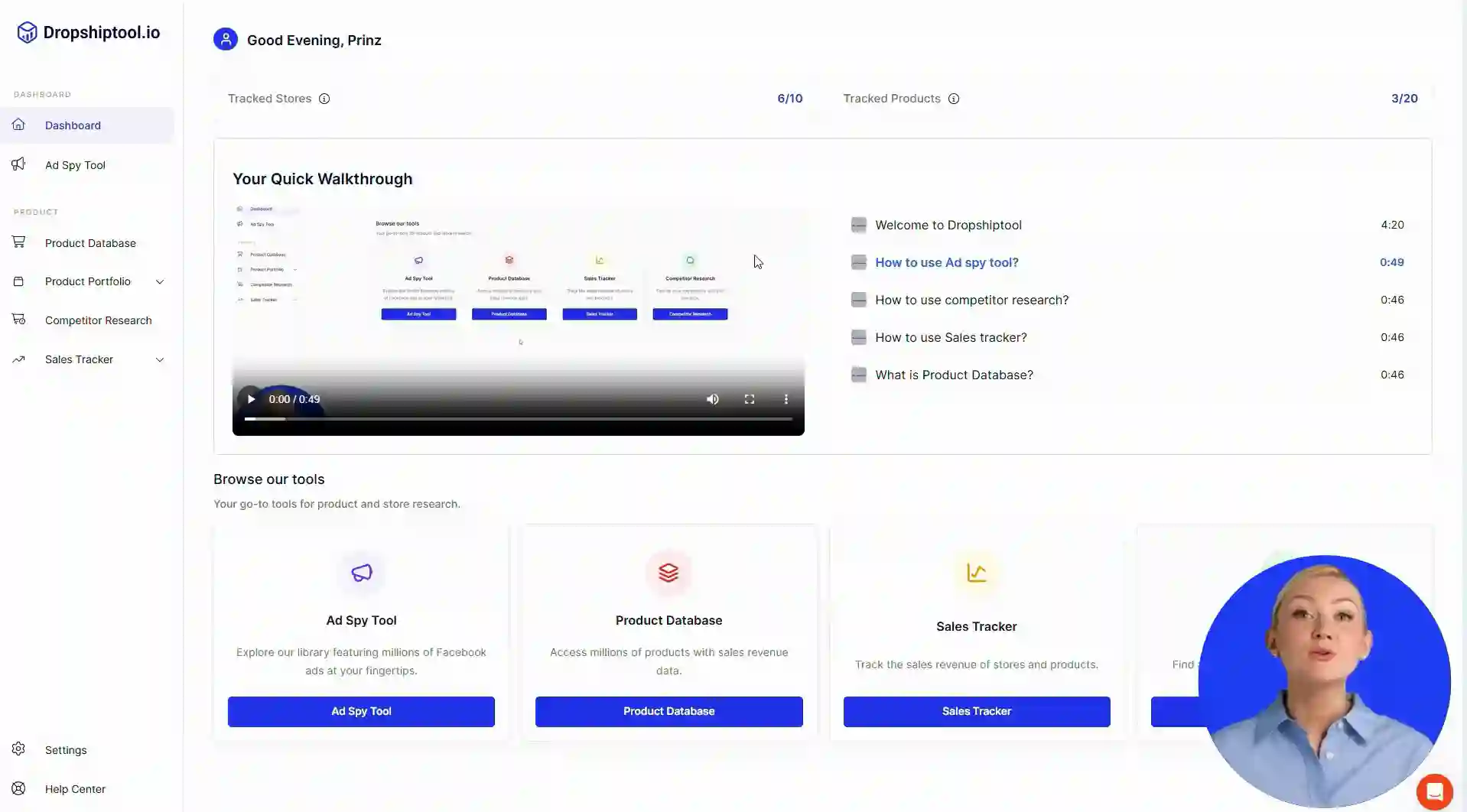
You should start with a focused list of competitor stores rather than a random mix of examples. Several research resources suggest combining search queries with specialized tools so you can find relevant Shopify stores in your niche quickly.
You can use search operators such as site:myshopify.com inurl:/products/ plus niche keywords to surface Shopify stores that already sell products you care about. This gives you a raw list that proves real stores exist around your idea.
From there, Dropshiptool’s competitor research tool lets you enter a niche, keyword, or store URL and see which dropshipping stores sell related items, how active they are, and which products keep showing up in their catalogs. Instead of manually clicking through search results, you can filter competitors by price range, ratings, sales signals, and other insights inside one dashboard.
Once you have that list, you can shortlist stores that match your level of complexity. You may prioritize single‑product funnels or small catalogs with clear hero products if you want cleaner systems to model.
Step 2: Read Product Catalogs and Pricing the Right Way
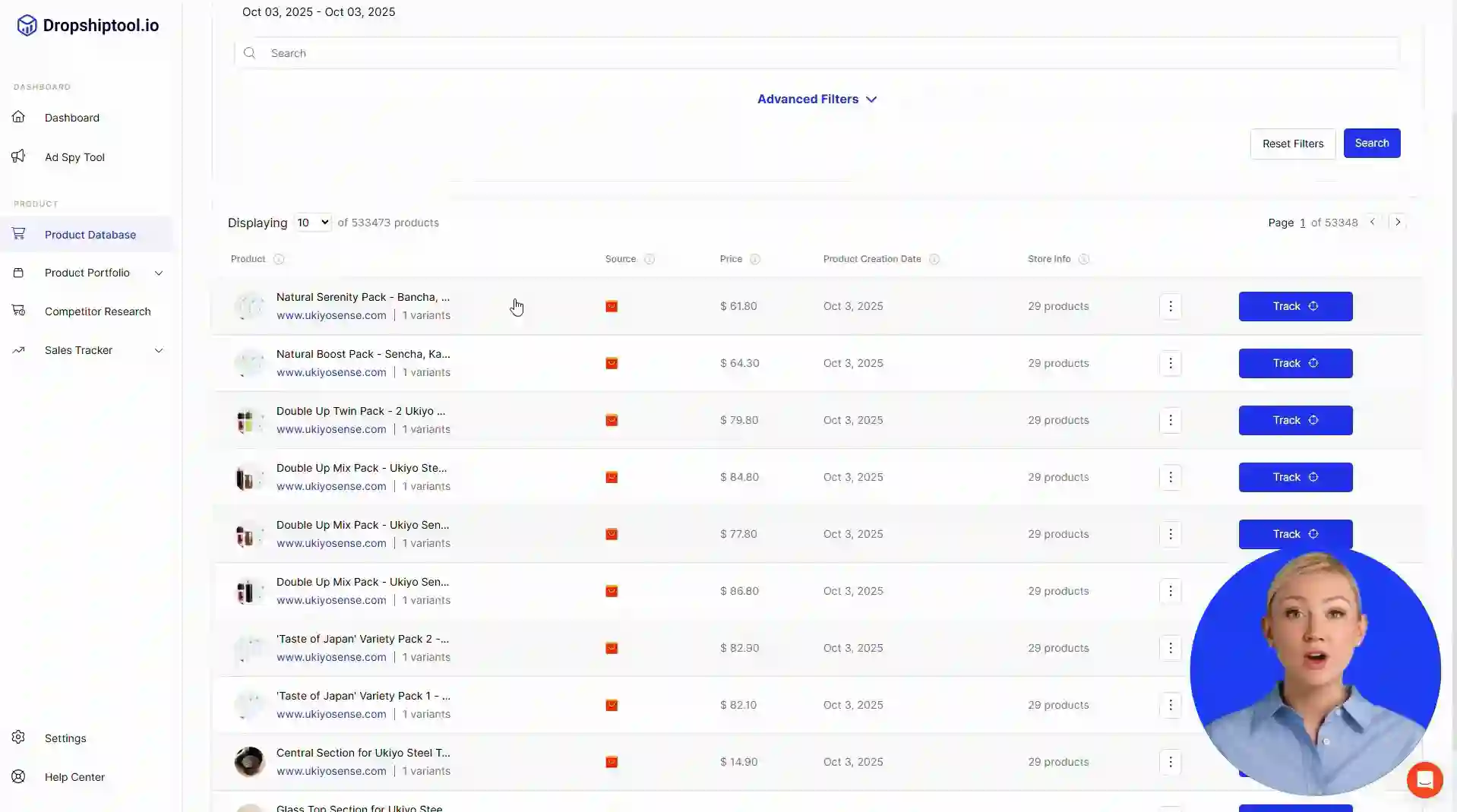
When you open a competitor’s catalog, you are not just browsing items. You are reading a story about how they want customers to move through the store. Guides on dropshipping research advise you to track which products stay, how they are grouped, and how prices stack across variants and bundles.
You can use Dropshiptool’s Product Database to view products from many Shopify stores in a single library, each with data like price, ratings, reviews, supplier location, and performance signals. Filters for category, price range, and trends help you see how competitors align pricing with perceived value instead of looking at one store in isolation.
You could:
- Compare price bands for similar products to see where most stores cluster and where some push higher ticket offers.
- Check product creation dates alongside sales signals to see which items remained in the catalog and which disappeared.
- Note how often stores use bundles or volume discounts to lift revenue rather than relying on single unit pricing.
This catalog reading step matters because it keeps you from copying the loudest product; you copy the ones that survived changes over time.
Step 3: Track Ads Instead of Just Browsing Feeds
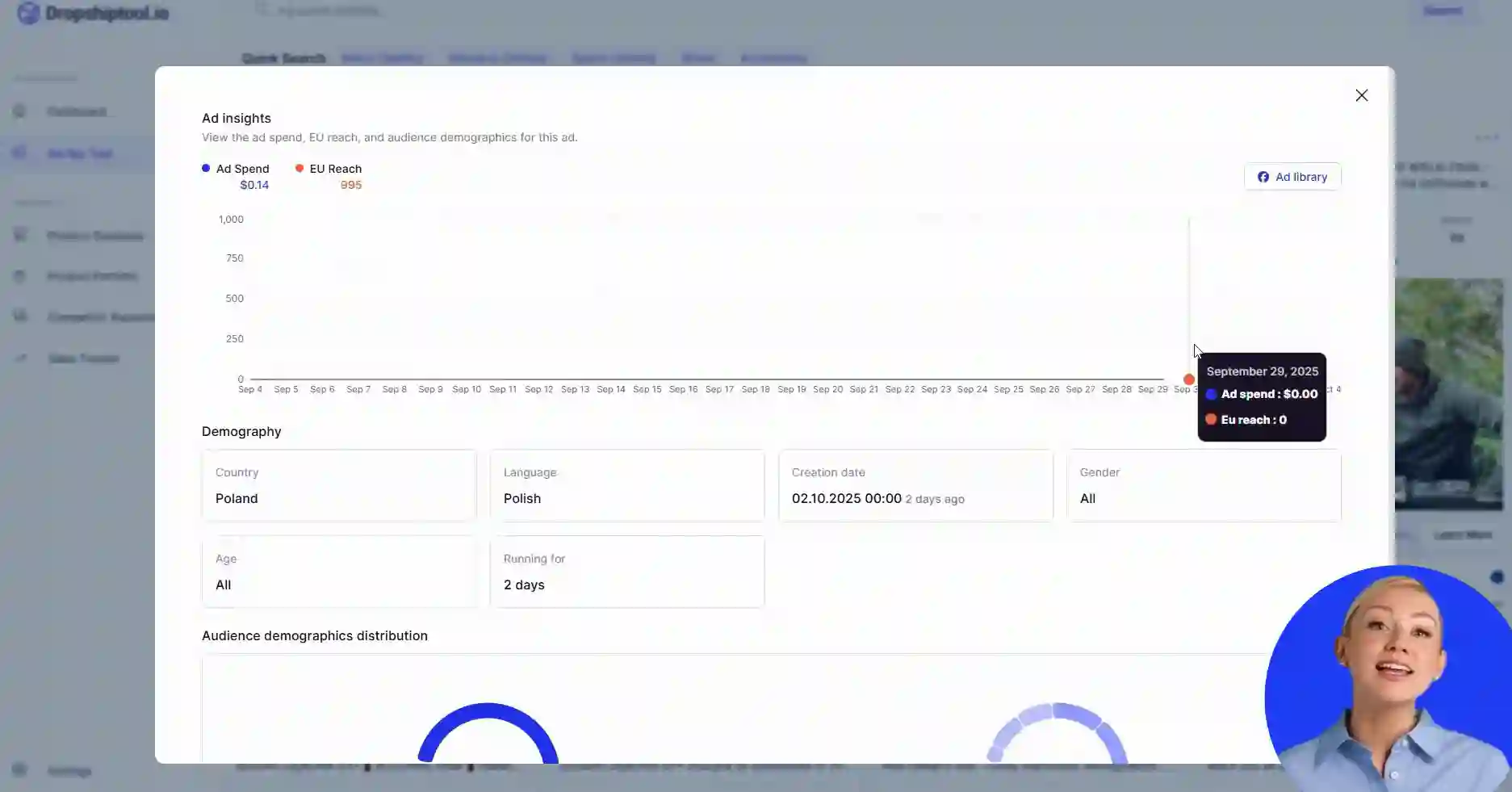
You can scroll TikTok or Instagram for hours and still miss which creatives actually pay the bills. That is why experienced dropshippers rely heavily on structured ad libraries and spy tools.
Free methods include Meta’s Ads Library, where you can search store names and see which ads are active, the creative formats, and basic engagement signals. If you notice a competitor running the same two or three ads over many weeks, there is a strong chance those ads convert well enough to keep live.
To go deeper, Dropshiptool’s Ad Spy Tool lets you search and filter millions of ads from Facebook, Instagram, TikTok, and display networks by keyword, country, niche, engagement, and format. You can see how long campaigns stay active, which creatives get repeated, and which products show up across multiple stores.
You can:
- Search your niche to see which hooks and angles appear in winning creatives.
- Filter by region to check how offers change across markets.
- Track how often certain product names show up across unrelated stores, which hints at broad demand.
If you need to, you can overlay this with manual comment reading from public ad pages to see customer reactions and objections before you write your own copy.
Step 4: Spy on Live Sales and Revenue Patterns
Catalogs and ads tell you what competitors want customers to see. Sales trackers show whether those plans actually work. Several Shopify spy resources lean heavily on tools that monitor live orders, revenue estimates, and best‑selling products.
Dropshiptool’s AI Sales Tracker focuses on this layer by tracking live and historical sales data from Shopify stores you add to the system. You can monitor top‑selling products, revenue trends, and niche performance to see which stores are steadily growing and which ones flatten out.
You can:
- Add a competitor store and watch how daily sales behave over time, instead of relying on static screenshots.
- Compare sales signals across several stores in the same niche to see which strategies correlate with growth.
- Track individual products to understand when they start growing, plateau, or decline.
Sales trackers do not replace your own analytics, but they help you avoid copying products that only look strong on the surface. If a product’s ads look busy but its store‑level sales graph is flat, you may be looking at aggressive testing rather than a proven winner.
Step 5: Turn Competitor Spying Into a Weekly Workflow
You should treat spying as a repeating process with clear steps. Long‑form competitor research guides suggest working in cycles so you do not drown in data.
A practical weekly routine could be:
- Update your competitor list: Use Competitor Research view to search new stores in your niche and retire those that went quiet.
- Scan product trends: Open Product Database to check which products gained traction, which new items appeared, and how pricing shifted.
- Review ads: Spend time in Ad Spy Tool plus Meta’s Ads Library to see fresh creatives and long‑running campaigns.
- Check sales trackers: Use Dropshiptool’s Sales Tracker to watch revenue patterns and highlight products backed by sustained sales.
- Add ideas to your testing queue: Cross‑reference promising products with your store’s niche, audience, and sourcing options before you commit.
You can adjust the frequency as your store grows, but keeping this loop consistent helps you stay near the front of real trends rather than reacting late.
How To Spot Products You Should Not Copy?
Spying is not only about finding winners. It also helps you avoid losing bets. Research content on competitor products points out several red flags that appear often in dropshipping.
If you notice a product that only shows up in short bursts of ads and then disappears from catalogs, that pattern suggests the tests did not justify ongoing spend. You should treat those products with caution, even if creative hooks feel strong.
Products that rely entirely on viral short‑form clips with little paid presence tend to appear at saturation by the time you see them. If you already see many stores running nearly identical TikTok‑style ads and similar landing pages, the window for easy profit may have passed.
You should also watch how competitors handle risk and claims. Some stores push health promises or aggressive guarantees that could create account issues. If you cannot support those claims inside your own policy and customer service workflows, you should not copy that product angle even if the current ads look impressive.
How To Spy Ethically on Others when Doing Product, Store, and Niche Research?
Dropshipping blogs and legal guides underline that spying should always use public data and respect platform rules. You look at what stores choose to reveal through their sites, ads, and product pages. You do not break into private dashboards or scrape customer data.
You should respect intellectual property. When you study creative angles, you recreate hooks and demos with your own footage, copy, and branding rather than lifting entire ads. Platforms like Meta keep logs of duplicate creatives, and repeated cloning can hurt reach or raise policy problems.
You should also avoid misleading customers. If you learn about a competitor’s guarantee or bundle through spying, you match or exceed it only when you can honor it with your own logistics and support. Research is supposed to sharpen offers, not push you into claims you cannot stand behind.
Conclusion
You can stop treating competitor spying as a vague habit and turn it into a clear research process that runs every week. When you focus on catalog changes, long‑running ads, and sales patterns, you gain a realistic picture of what actually works in your niche instead of chasing every viral clip.
You will build stronger decisions by combining public data with structured dashboards such as Dropshiptool’s, then applying those lessons to products and funnels that fit your skill level and logistics.