Trending Dropshipping Products to Sell in 2026 (28 Picks)

The trending dropshipping products for 2026 are mostly practical upgrades that look good in a 15-second video: LED face masks, heatless curlers, lick mats for dogs, magnetic power banks, portable car vacuums, electric spin scrubbers, sunrise alarm clocks, packing cubes and mouth tape for better sleep. Below you'll find 28 products grouped by category, with a typical retail price and the reason each one is selling. After that, we show you how to spot the next trend yourself before it's saturated.
One honest warning first. A list like this is a starting point, not a shopping list. By the time a product is on every blog, the first wave of sellers has already taken the easy profit. Use these as categories and angles to research, then check live sales data before you spend a cent on ads.
What makes a winning dropshipping product in 2026?
Before the list, here's the filter we used. A product earns a place if it hits most of these points:
| Criterion | What to look for | Why it matters |
|---|---|---|
| Visible problem and result | You can show the before and after in a few seconds | Short-form video ads and organic posts do the selling |
| Price between $20 and $80 | Impulse-friendly but not cheap | Leaves room for ad costs and payment fees |
| Markup of 2.5x or more | Landed cost under 40% of retail | Protects margin if your ad cost per sale goes up |
| Light and sturdy | Under about 1 to 2 kg, not fragile | Cheap shipping, fewer damaged deliveries |
| Not easily found in local stores | Shoppers can't grab it at the supermarket | Buyers will wait for delivery |
| Rising, not peaked | Search and sales trending up over weeks | You get in before price wars start |
| Room for an angle | Bundles, a niche audience or better branding | Lets you stand out from copycat stores |
For a deeper version of this checklist, read our guide to validating a product before you sell it.
Trending dropshipping products to sell in 2026
Price ranges are typical retail on independent Shopify stores. Your supplier costs will vary, so always check landed cost (product plus shipping) before setting your price.
Beauty and personal care
Beauty is one of the biggest categories in social commerce, and McKinsey's State of Beauty 2025 sizes the global market at about $450 billion. Tools and devices beat creams for dropshippers because quality is easier to check and there's no formula to worry about.
- LED face masks ($60 to $180). At-home versions of clinic treatments, popular with skincare creators. Keep claims cosmetic (“for a brighter-looking complexion”) unless the device has clearance for medical use.
- Heatless curling rod sets ($15 to $35). Overnight curls without heat damage. The “put it in at night, take it out in the morning” reveal is made for video.
- Ice rollers and cooling face tools ($12 to $25). Cheap, giftable, and part of morning-routine content that never seems to slow down.
- Scalp massagers and hair oil applicators ($12 to $25). Ride the long-running hair-growth and hair-oiling trend. Bundle with a silk scrunchie to lift order value.
- Reusable press-on nail kits ($15 to $30). Salon look for a fraction of the cost. New designs every season keep customers coming back.
Health, sleep and wellness
- Mouth tape for sleep ($10 to $20). Popularised by sleep and breathing content. It's a consumable, so customers reorder. Avoid health claims.
- Weighted or contoured sleep masks ($20 to $40). Blackout design plus pressure for relaxation. Sleep is a problem people happily pay to fix.
- Acupressure mats ($25 to $50). A recovery and relaxation product with strong reaction videos.
- Under-desk walking pads ($180 to $350). Higher ticket and heavier, so only work with suppliers that ship from a warehouse in your customer's country. The margin per order makes up for fewer sales.
Home and kitchen
- Electric spin scrubbers ($30 to $70). Cleaning-hack videos (grout, bathtubs, car wheels) pull huge view counts on TikTok, and this product delivers a visible result.
- Portable rechargeable blenders ($25 to $45). Smoothies at the gym or office. Easy to demo, good for gym and wellness audiences.
- Rechargeable motion-sensor lights ($20 to $45). Stick-on lights for wardrobes, stairs and under cabinets. Renter-friendly, no wiring, sold in multipacks.
- Sunrise alarm clocks ($30 to $60). Wake up to gradual light instead of a buzzer. Peaks every autumn and winter as mornings get darker.
- Stackable glass food storage sets ($25 to $50). Meal-prep and “fridge restock” content keeps this category moving. Watch breakage, so choose suppliers with good packaging.
Pet products
The American Pet Products Association reports U.S. pet spending of about $158 billion in 2025, with around $165 billion projected for 2026. Pet owners buy often and love buying gifts for their pets.
- Lick mats and puzzle feeders ($12 to $25). Slow feeding and anxiety relief. Cheap to ship and great for bundles.
- Cat water fountains ($25 to $50). Many cats prefer running water, and replacement filters bring repeat orders.
- No-pull dog harnesses ($25 to $45). Solve a real daily problem for owners. Offer clear size guides to keep returns low.
- Reusable pet hair remover rollers ($15 to $25). Satisfying “look how much hair it picked up” videos sell this one.
More ideas in our winning pet products roundup.
Tech and phone accessories
- Magnetic wireless power banks ($30 to $60). Snap onto the back of most recent phones. Everyday carry products with year-round demand.
- Auto-tracking phone tripods ($25 to $60). The camera follows you as you move. Every creator, coach and small business owner filming content is a potential buyer.
- Wireless clip-on microphones ($20 to $45). Same buyer as the tripod. Bundle the two.
- Mini portable projectors ($80 to $200). Movie nights in bedrooms and gardens. Higher ticket, so sell on picture quality and avoid exaggerated brightness claims.
Car accessories
- Cordless handheld car vacuums ($30 to $60). Car-cleaning videos are a whole genre. Good margins and broad appeal.
- Seat-gap organisers and fillers ($15 to $30). Stops phones and keys falling down the side of the seat. Cheap, easy to explain, sold in pairs.
- Magnetic car phone mounts ($15 to $35). An evergreen product that keeps selling as people switch to magnetic phone cases.
Travel, outdoor and fashion accessories
- Compression packing cubes ($20 to $40). Carry-on-only travel content keeps this one moving. Sell as sets in multiple colours.
- Rechargeable camping lanterns ($20 to $40). Work for camping, power cuts and garden evenings. Spring and summer peaks.
- Crossbody sling bags ($20 to $45). Hands-free bags that suit travel, festivals and everyday carry. Strong in fashion and travel content.
Print-on-demand items like custom pet portraits and personalised gifts also keep selling, and they carry no stock risk because each item is printed after the order comes in.
How to spot trending products yourself
Lists go stale. A repeatable research routine doesn't. Here's how experienced sellers find products while they're still rising.
1. Check search trends
Google Trends tells you whether interest is growing, flat or fading. Compare the product name against a related term, set the range to 12 months and five years, and look for a steady climb rather than one sharp spike. Check your target country, because trends often hit the US first and the UK, Australia or Europe a few months later. That lag is an opportunity.
2. Watch TikTok and short-form video
Search the product on TikTok and sort by recent. Lots of new videos from different creators, comments asking “where do I get this?” and organic reposts are strong signals. The TikTok Creative Center shows top ads and trending hashtags by country. Watch for products where the comments are asking questions, not just reacting.
3. Look at marketplace movement
Amazon's Movers and Shakers list shows the biggest gains in sales rank over the last 24 hours. It's noisy, but a product that keeps appearing there over several weeks is worth a look.
4. Follow the stores that are selling
This is the step most beginners skip, and it's the most reliable. Interest isn't sales. You want to know which Shopify stores are actually selling a product, how fast and at what price.
- Product Portfolio gives you a curated set of winning products every week, with the data behind them, so you start from products that are already proving themselves.
- Product Database lets you filter products by niche, price, sales and launch date to find products picking up speed.
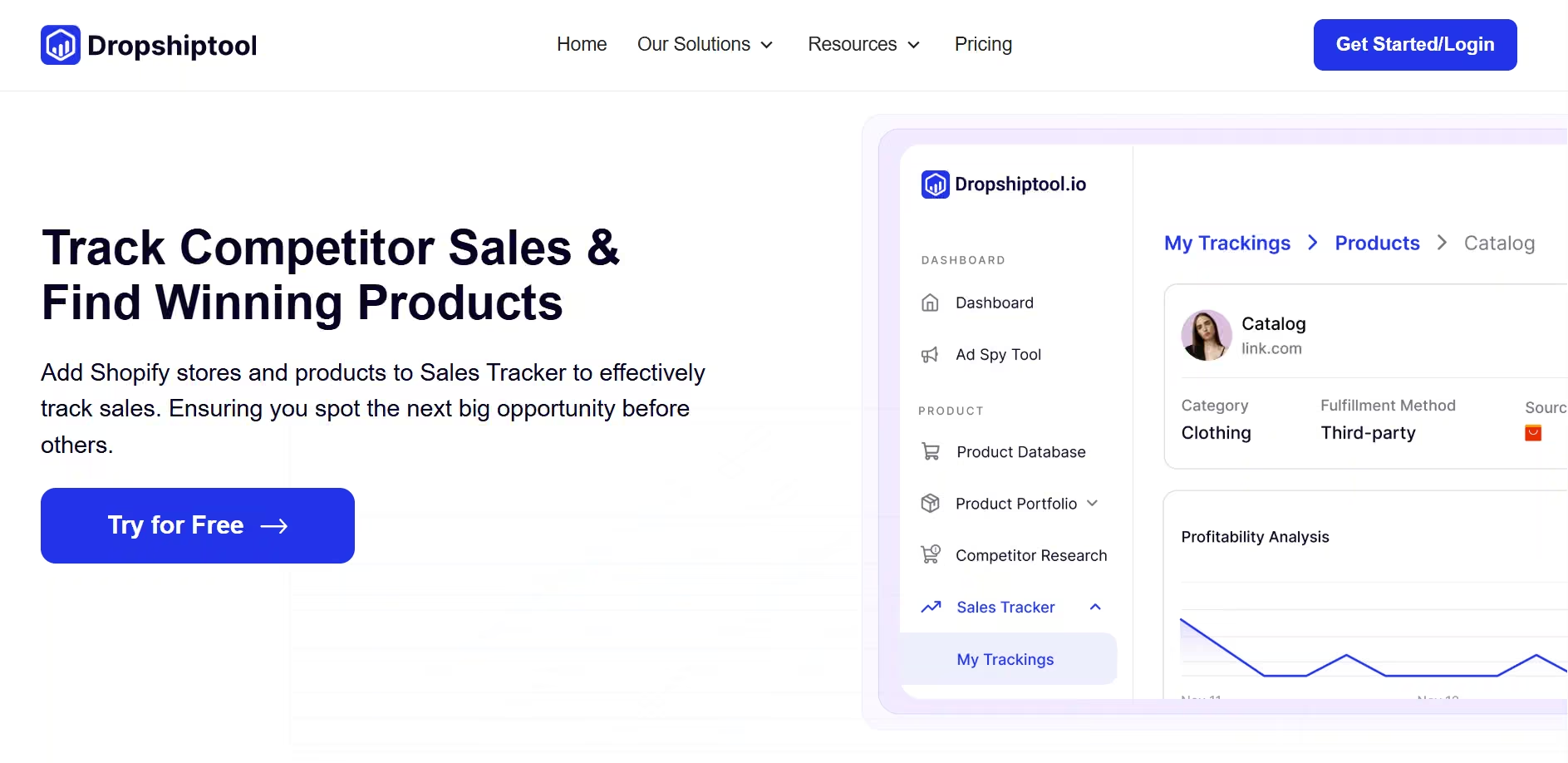
- Sales Tracker follows specific Shopify stores, so you can see daily sales on their best sellers and spot a product the moment it starts to move.

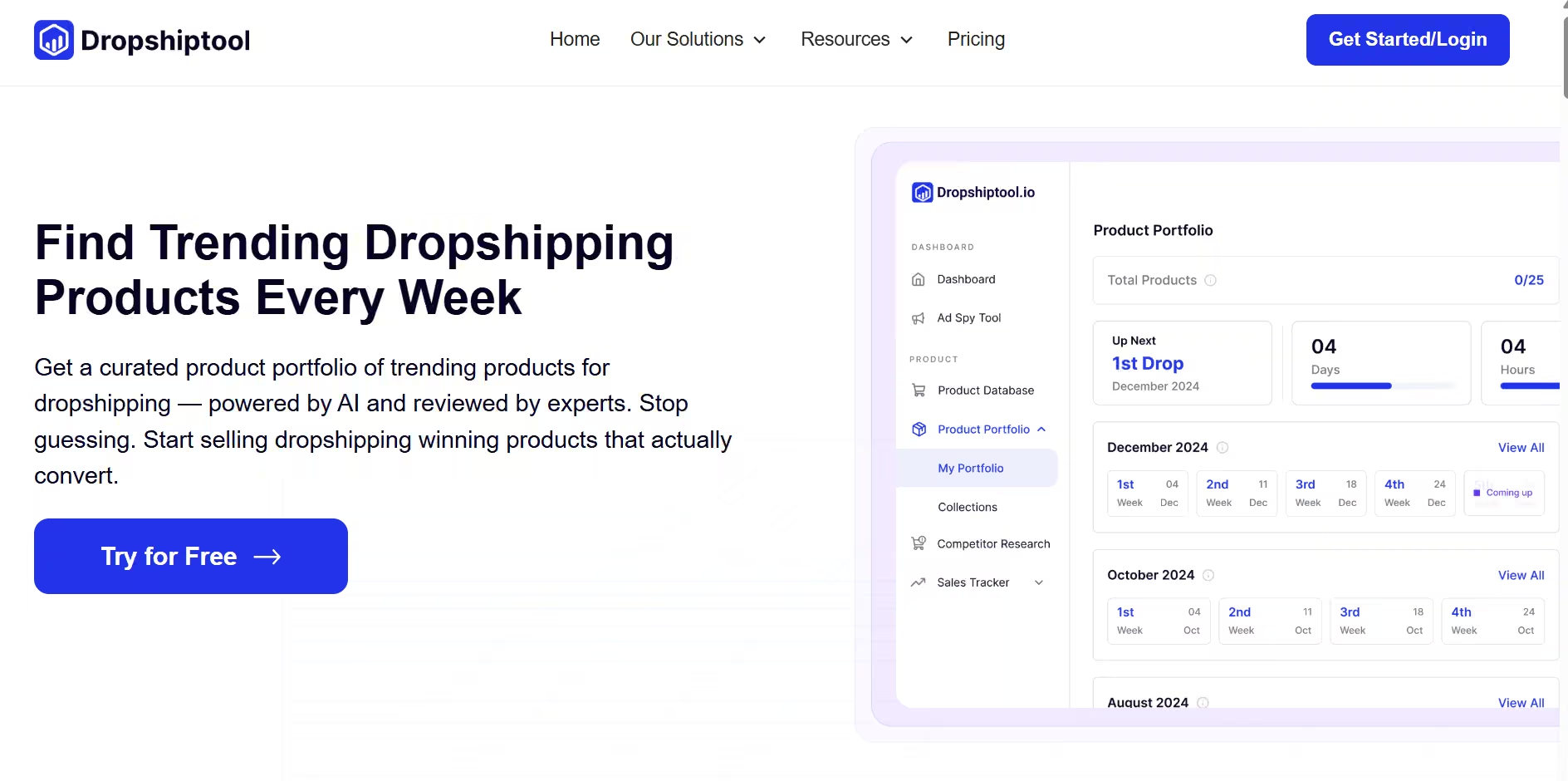
If you want to try this routine, you can open a free Dropshiptool account and start with this week's Product Portfolio.
5. Check the ads
A product with several advertisers running ads for weeks or months is usually profitable for someone. A product with one ad that went viral last week might not be. The Ad Spy Tool shows how long creatives have been running and which angles they use. Pair it with our guide on finding trending products before they go viral.
How to tell a trend from a fad
Not every trending product is worth selling. A few quick tests:
- Does it solve a lasting problem? Seat-gap organisers solve a problem that will exist as long as cars have seats. A novelty toy tied to one meme won't last.
- Are sales steady across several stores? One store with a spike can be a lucky ad. Five stores with steady daily sales is a market.
- Are prices holding? When the cheapest listing keeps dropping every week, you're watching saturation happen. Our guide to spotting a saturated product explains the warning signs.
- Is it seasonal? Seasonal is fine (sunrise alarms in winter, lanterns in summer). Just plan your launch four to six weeks before the peak, not during it.
Seasonal timing for the next six months
Trending products often follow the calendar. Since we're writing in October 2026, here's when to launch the products above so you're live before demand peaks, not after:
| Launch window | Demand peak | Products to prepare |
|---|---|---|
| Late October | Black Friday to Christmas | LED face masks, mini projectors, auto-tracking tripods, magnetic power banks, gift bundles |
| November | December to February (Northern Hemisphere winter) | Sunrise alarm clocks, weighted sleep masks, acupressure mats, cordless car vacuums |
| Mid December | January “new year, new routine” | Walking pads, portable blenders, glass meal-prep containers, mouth tape |
| February | Spring travel and cleaning season | Packing cubes, sling bags, electric spin scrubbers, motion-sensor lights |
| March | Spring and early summer outdoors | Camping lanterns, no-pull harnesses, pet hair rollers |
Flip the seasons if you sell to Australia, New Zealand or South Africa. Their summer peak for outdoor products is December to February.
Tips for selling trending products profitably
- Move fast, but test small. Launch three to five products with a modest daily budget each. Cut losers after a few days, scale winners.
- Use faster suppliers. Trending products sell on impulse, and impulse buyers don't wait three weeks. US and EU suppliers through Spocket cut delivery times. AliDrop is useful for testing AliExpress products before you move to faster fulfilment.
- Make your own creatives. Everyone downloads the same supplier video. Ordering a sample and filming your own clips is the cheapest way to stand out.
- Bundle and upsell. Tripod plus microphone, lick mat plus treats, packing cubes plus a toiletry bag. Bundles raise order value and make price comparisons harder.
- Plan the next product. Trends fade. Build your store around a niche (pet, beauty, car) so you can rotate in new trending products without starting over. Our best dropshipping niches guide helps you pick one, and the weekly winning-products routine keeps your pipeline full.
Finding your next product
The trending dropshipping products for 2026 share a pattern: visible results, everyday problems, prices between $20 and $80, and products light enough to ship cheaply. Beauty tools, sleep products, cleaning gadgets, pet enrichment, creator tech and car accessories lead the way. But the real advantage isn't this list. It's having a routine that shows you which products are selling right now and which stores are selling them.
Sign up for Dropshiptool to get the weekly Product Portfolio, search the Product Database and track the stores behind every trending product.