Key KPIs Every Dropshipper Must Track

Running a successful dropshipping store means watching more than just your sales numbers. You need to know which products are actually making you money, how your marketing dollars are performing, and whether your customers will come back for a second purchase. Without tracking the right KPIs, you're flying blind—making decisions based on gut feelings instead of data.
That's why every dropshipper should have a clear set of metrics to monitor. This blog walks you through the most important dropshipping KPIs you need to track, how to measure them, and how to use them to scale your store faster.
What are Dropshipping KPIs?
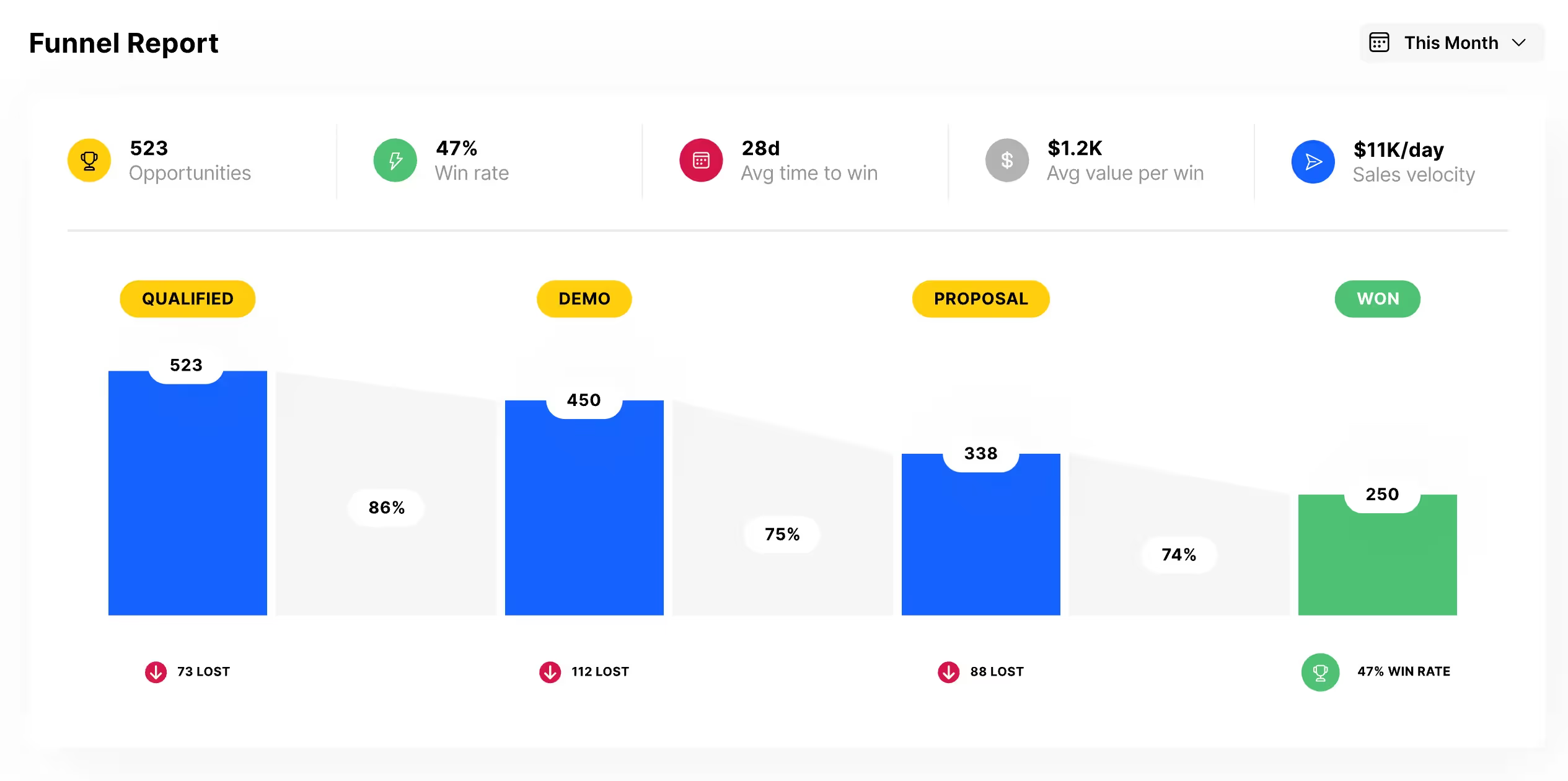
Key Performance Indicators (KPIs) are the vital signs of your dropshipping business. They tell you what's working, where you're losing money, and where to focus your efforts next. Without them, you're making decisions in the dark. A profitable dropshipping store isn't built on high sales alone—it's built on smart metrics that show you the real picture behind your numbers.
Why Are Dropshipping KPIs Important?
Think of KPIs as your business dashboard. They answer questions like: Are my ads turning visitors into paying customers? Is my profit margin healthy or shrinking? Are customers coming back for repeat purchases? By tracking dropshipping KPIs, you move from guessing to knowing exactly what drives your success.
The problem most dropshippers face is information overload. There are dozens of metrics you could track, but not all of them matter for your bottom line. This is where having a focused set of dropshipping KPIs makes all the difference. You track what moves the needle, ignore the noise, and spend your time and money where it counts.
Key Dropshipping KPIs You Must Track in 2025
Here are the key dropshipping KPIs every business owner or dropshipper should track, starting this 2025:
Financial Dropshipping KPIs
Your business survives on profit, not just sales. Two stores can have the same revenue but vastly different profit margins. The difference comes down to tracking financial KPIs that keep your costs in check.
Cost of Goods Sold (COGS)
COGS includes everything it costs you to get a product into a customer's hands: supplier costs, shipping to your warehouse, packaging, and payment processing fees. If your COGS is too high, your margins shrink even if sales look good on paper.
To lower your COGS, negotiate better rates with suppliers, test different shipping methods, and look for bulk packaging discounts. Even a 10% reduction in COGS directly adds money to your bottom line.
Profit Margin and Gross Profit
Your profit margin shows what percentage of each sale is actual profit. If you sell a product for $30 and your COGS is $10, your gross profit is $20. That's a 67% margin. But after marketing, platform fees, and customer service, your net profit might be 15-20%.
Track both gross and net profit margins monthly. If they're declining, it's a red flag. Either your COGS is climbing, your prices are dropping, or your operating expenses are growing too fast.
Customer Acquisition Cost (CAC)
How much are you spending to get one customer? CAC is your total marketing spend divided by the number of new customers acquired. If you spend $500 on ads and get 10 customers, your CAC is $50 per customer.
The problem is when CAC gets too high. If your average order value is $40 and your CAC is $50, you're losing money on every new customer. You need your CAC to be roughly 25-30% of your customer lifetime value to run a profitable business.
Average Order Value (AOV)
AOV is the average amount each customer spends per order. A customer who buys one item versus a bundle or multiple items generates different revenue. Higher AOV means better profit with the same number of customers.
To increase AOV, bundle products together, offer volume discounts, and upsell related items at checkout. Even a $5 increase in AOV can significantly impact your annual profit.
Marketing & Sales Dropshipping KPIs
These turn your visitors into customers. Traffic is worthless if it doesn't convert. These KPIs show whether your marketing efforts are actually making money or just draining your budget.
Conversion Rate
Your conversion rate is the percentage of visitors who make a purchase. If 1,000 people visit your store and 50 buy something, your conversion rate is 5%. For dropshipping, a healthy conversion rate is 1-3%, though niche stores often perform better.
A low conversion rate signals problems—unclear product pages, slow checkout, unexpected fees, or poor product-market fit. Test different page layouts, simplify your checkout process, and build trust with customer reviews. Small improvements here multiply your revenue without increasing marketing spend.
Traffic Sources and Performance
Not all traffic is equal. If 50% of your sales come from TikTok ads but only 10% from Google Search, that's where you should invest more money. Track which channels drive the most valuable customers, not just the most clicks.
Some channels might send tons of traffic but low-quality visitors who don't buy. Other channels send fewer visitors but higher-intent buyers. By knowing this, you eliminate wasteful spending and double down on what works.
Cart Abandonment Rate
Your cart abandonment rate measures how many shoppers add items to their cart but leave without buying. A rate of 60-70% is normal, but you can improve it. High abandonment often means unexpected shipping costs, a clunky checkout, or security concerns.
To reduce it, display shipping costs upfront, allow guest checkout, simplify your form fields, and send automated recovery emails offering a discount. Cart recovery alone can reclaim 10-15% of lost sales.
Customer Lifetime Value (CLV)
CLV is the total profit you'll make from a customer over their entire relationship with your store. A customer who buys once and leaves has low CLV. A customer who buys every month for years has high CLV.
Customers with high CLV offset higher CAC because they generate revenue repeatedly. Focus on retention strategies like loyalty programs, post-purchase emails, and reorder incentives to boost CLV and build a more stable business.
Return on Ad Spend (ROAS)
If you spend $100 on ads and generate $400 in revenue, your ROAS is 4:1. For most dropshippers, a 3:1 ROAS is the minimum needed to stay profitable after accounting for operating costs.
If your ROAS is declining, your ads are losing efficiency. Test new audiences, refresh creative content, and pause underperforming campaigns. Even 0.5 improvement in ROAS means significantly more profit.
Operational Dropshipping KPIs
Great marketing gets customers to your door, but operations keep them happy and coming back. Here are the key operational dropshipping KPIs you must track without fail:
Fulfillment and Shipping Times
Dropshipping inherently has longer shipping times than traditional retail. Your job is to manage expectations and choose reliable suppliers. If you promise 10-day delivery and consistently take 20 days, you'll get refund requests and bad reviews.
Track average shipping times by supplier. If one is consistently slow, replace them. If all are meeting targets, use that as a competitive advantage in your marketing.
Order Accuracy Rate
Wrong item shipped. Wrong color or size. Items missing from the order. These mistakes destroy customer trust and lead to returns. Aim for a 99%+ accuracy rate.
An accuracy problem usually points to supplier issues or your own quality control gaps. Work with suppliers to reduce errors, and consider spot-checking orders before they ship if accuracy is poor.
Refund and Return Rates
High returns signal product quality issues, misleading descriptions, or poor packaging. If 15% of orders get returned, you're bleeding profit. Investigate what's being returned. Are customers surprised by product size? Quality? Then change your descriptions or switch suppliers.
Track returns by product. If one item has a 40% return rate and others are under 5%, stop selling that product. Dropshipping requires ruthless product management.
Using an AI Sales Tracker to Monitor Competitor KPIs
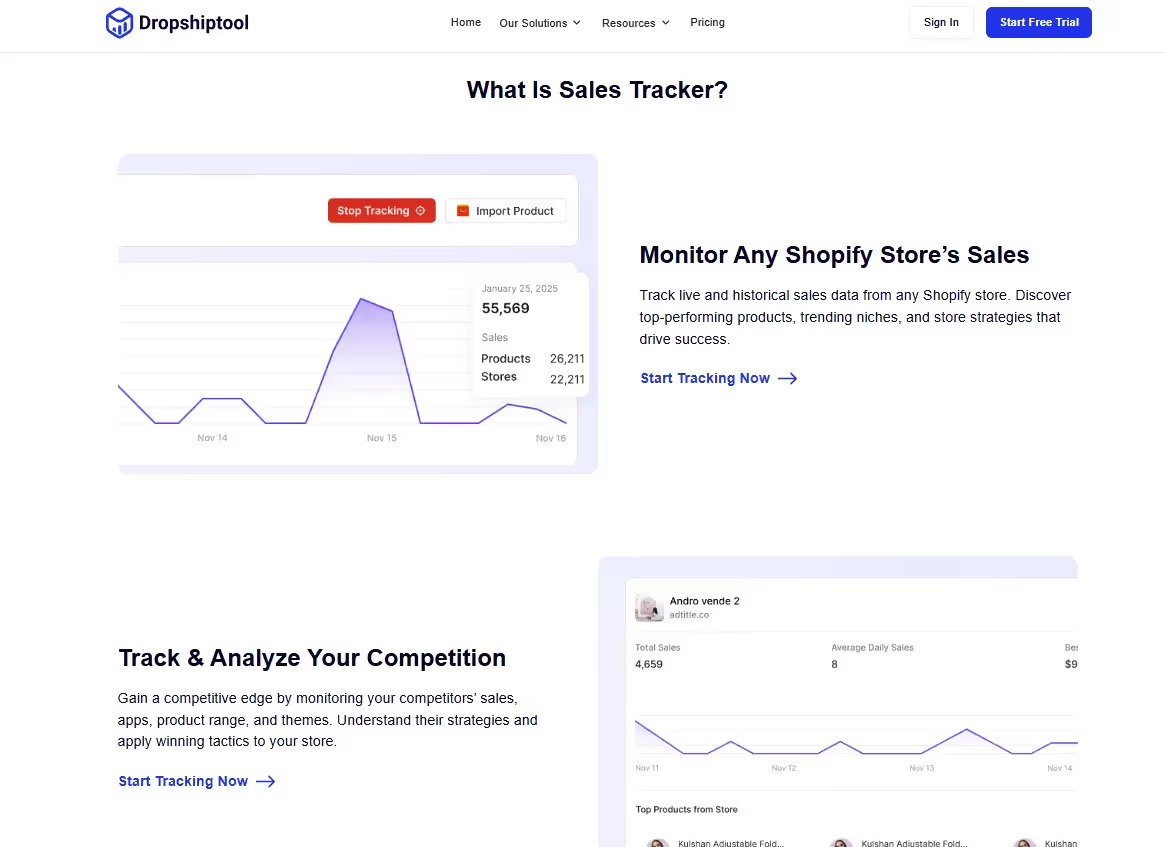
You don't just need to track your own metrics—you need to watch your competition too. Dropshiptool's AI sales tracker gives you access to competitor data that most dropshippers miss. You can track live sales from any Shopify store and see which products are actually moving inventory.
You can see winning products from competitors, understand their pricing strategy, and spot trends before they saturate. Dropshiptool’s AI sales tracker gives you fresh drops of hot-selling products every week, so you're not chasing yesterday's trends.
Download detailed reports to analyze product performance and market trends offline. The live data updates frequently, so you get accurate insights on competitor performance and product demand in real time. Instead of guessing which products will sell, you're watching actual sales data.
This competitive intelligence turns dropshipping KPIs from a defensive measure into an offensive strategy. You're not just managing your store—you're staying ahead of market shifts.
How to Set Up Your Dropshipping KPI Tracking System
Tracking metrics manually across multiple spreadsheets is painful and error-prone. You need a system. Here is how you get started.
Start with Google Analytics
For website traffic and conversion data. Add Shopify Reports for revenue, AOV, and abandonment rates. For ad performance, use Facebook Ads Manager and Google Ads. All these platforms have built-in dashboards that update in real time.
Use Google Data Studio
You can use Google Data Studio to build a single dashboard that pulls data from all your sources. Instead of checking five different platforms daily, you check one dashboard that shows you everything. It saves time and ensures you're looking at the same numbers everywhere.
Set Benchmarks
All these should be based on industry standards and your own history. If your conversion rate is 2% but your industry average is 2.5%, you have a concrete target. If your CAC is rising while CLV stays flat, that's a warning sign.
Review your KPIs
You should review your dropshipping KPIs weekly or monthly, not daily. Daily fluctuations are noise. Monthly trends reveal patterns. When you see a negative trend, dig in and fix it. When you see improvement, figure out why and do more of it.
Act On Your KPI Data
Collecting data is useless if you don't act on it. Every KPI should prompt a question: What's driving this number, and can I improve it?
If the conversion rate is low, run A/B tests on your product pages. If CAC is rising, pause underperforming ad campaigns and test new audiences. If shipping times are slow, find faster suppliers. If cart abandonment is high, simplify checkout and add security badges.
The businesses that win at dropshipping are the ones that test, measure, and iterate. They track dropshipping KPIs obsessively and use that data to compound small wins into big growth.
Conclusion
By tracking the right dropshipping KPIs, you'll know exactly where your business stands and where to improve. Start with the essentials and work your way up from those. Use Dropshiptool to get a headstart from your competition and get ahead more.
AI sales trackers can help you automate KPI tracking and monitoring. Review your metrics monthly, identify trends, and take action. The dropshippers winning right now aren't guessing—they're measuring and optimizing every part of their business.