Ghost Commerce vs Dropshipping — What's the Difference?

If you’ve been exploring ways to make money online, you’ve probably come across two popular terms—ghost commerce and dropshipping. At first glance, they seem almost identical. Both promise low startup costs, no inventory, and the ability to run a business from anywhere.
But here’s where things get confusing.
Some people treat them as the same model, while others present them as completely different business strategies. The truth lies somewhere in between—and understanding this difference can help you choose the right path for your goals.
In simple terms, ghost commerce is a broader concept, while dropshipping is a specific business model within that ecosystem. Once you understand how they connect, everything becomes much clearer.
Let’s break it down step by step.
What Is Ghost Commerce?
Ghost commerce is a low-inventory online business model where you sell products or services without physically handling them.
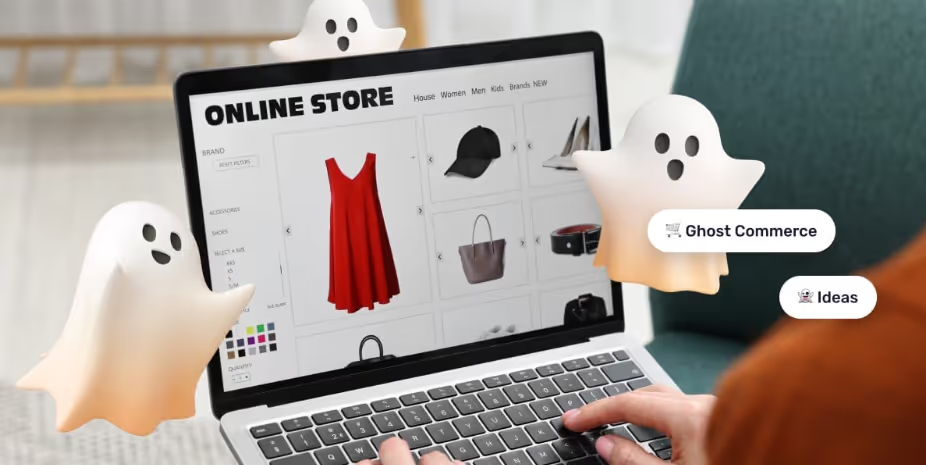
The term “ghost” comes from the idea that you’re operating behind the scenes. You don’t manufacture products, manage warehouses, or deal with logistics directly. Instead, you focus on marketing, branding, and driving sales.
How Ghost Commerce Works
At its core, ghost commerce revolves around three things:
- Promoting products or services
- Connecting customers with suppliers or platforms
- Earning revenue through commissions, markups, or digital sales
You act as the middle layer between demand and supply, but without traditional operational overhead.
Common Types of Ghost Commerce
Ghost commerce isn’t limited to one approach. It includes multiple business models such as:
- Affiliate marketing
- Print-on-demand
- White labeling
- Digital product sales
- Dropshipping
This flexibility is what makes ghost commerce so appealing. You can choose a model based on your strengths—whether that’s content creation, marketing, or ecommerce.
What Is Dropshipping?
Dropshipping is a specific ecommerce business model where you sell physical products through an online store, but a third-party supplier handles storage, packing, and shipping.

How Dropshipping Works
Here’s the typical flow:
- You create an online store and list products
- A customer places an order on your website
- You forward the order to a supplier
- The supplier ships the product directly to the customer
You never touch the product, but you control the pricing, branding, and customer experience.
Why Dropshipping Became Popular
Dropshipping gained massive traction because it:
- Requires minimal upfront investment
- Eliminates inventory risk
- Allows quick product testing
- Can scale rapidly with the right strategy
For many beginners, it’s one of the easiest ways to start an ecommerce business.
Is Dropshipping Part of Ghost Commerce?
This is the key question most people get wrong.
Yes, dropshipping is considered a part of ghost commerce.
Think of ghost commerce as an umbrella. Under it, you have different ways to make money without holding inventory. Dropshipping is simply one of those methods—specifically focused on selling physical products through a store.
The Relationship Explained
- Ghost commerce = broad concept
- Dropshipping = specific execution model
So instead of comparing them as opposites, it’s more accurate to see them as connected but not identical.
This distinction is important because it helps you understand your options more clearly.
Key Differences Between Ghost Commerce and Dropshipping
Ghost commerce and dropshipping may look similar on the surface, but they operate very differently once you dig deeper. The biggest difference lies in how much control you have—over products, customers, branding, and operations.
While ghost commerce focuses on flexibility and low involvement, dropshipping leans more toward building a structured ecommerce business. Understanding these differences will help you choose the model that aligns with your skills, risk tolerance, and long-term goals.
1. Business Scope
Ghost commerce covers a wide range of models, from affiliate marketing to digital products. Dropshipping, on the other hand, focuses specifically on selling physical goods through an ecommerce store.
2. Control Over Products
In ghost commerce, especially affiliate marketing, you often have little control over the product. In dropshipping, you choose products, set prices, and create the store experience.
3. Customer Ownership
With ghost commerce, you may not always own the customer relationship. For example, in affiliate marketing, the transaction happens on another platform.
In dropshipping, you own the store, which means:
- You control customer data
- You handle support
- You build long-term brand value
4. Branding Opportunities
Ghost commerce can be anonymous and minimal in branding. Dropshipping offers more opportunities to build a recognizable brand through:
- Custom stores
- Product positioning
- Marketing strategies
5. Fulfillment Responsibility
Ghost commerce models may not involve fulfillment at all. Dropshipping always involves fulfillment, but it is handled by suppliers.
6. Revenue Model
Ghost commerce can generate income through:
- Commissions
- Digital sales
- Licensing
Dropshipping earns revenue through product markups.
7. Time and Effort
Ghost commerce can be more passive, especially in content-driven models. Dropshipping requires more active management, including:
- Customer service
- Store optimization
- Supplier coordination
Pros and Cons of Ghost Commerce
Ghost commerce offers a low-risk way to start making money online, but it comes with trade-offs that aren’t always obvious at first. On one hand, you get flexibility, minimal upfront investment, and the ability to experiment with different income streams without heavy operational pressure.
On the other hand, you often sacrifice control—over products, pricing, and even customer relationships. Your success can also depend heavily on platforms, algorithms, or third-party systems, which makes long-term stability less predictable. Understanding both sides helps you decide whether you want simplicity or more ownership in your business.
Pros of Ghost Commerce
Ghost commerce is often seen as a beginner-friendly entry point into online income.
- Low Barrier to Entry: You don’t need a warehouse, inventory, or complex setup. Many models can be started with minimal investment.
- Flexible Business Models: You can switch between different approaches easily. If one model doesn’t work, you can pivot without major losses.
- Less Operational Stress: Since you’re not handling logistics, you can focus entirely on marketing and growth.
- Scalable with Content: If you build an audience through social media or blogs, you can scale income without directly increasing workload.
Cons of Ghost Commerce
Despite its appeal, ghost commerce has its limitations.
- Limited Control: You often rely on third-party platforms or suppliers, which can affect your revenue and customer experience.
- Lower Profit Margins: Commission-based models typically offer lower returns compared to owning a product or brand.
- Dependency on Platforms: Your income may depend heavily on algorithms, affiliate programs, or external policies.
Pros and Cons of Dropshipping
Dropshipping gives you more control compared to most ghost commerce models, especially when it comes to building a brand and managing your store. You can set your pricing, design your customer experience, and scale aggressively with the right strategy. However, this control comes with responsibility. You’ll need to handle customer support, manage supplier issues, and stay competitive in a crowded market. While the profit potential is higher, so is the effort required to maintain and grow the business. It’s a better fit for those who want to build something long-term rather than just test the waters.
Pros of Dropshipping
Dropshipping remains one of the most popular ecommerce models for a reason.
- Full Store Ownership: You control your website, pricing, and customer journey. This allows you to build a long-term business.
- Higher Profit Potential: Since you set your own prices, you have more control over margins.
- Faster Scaling Opportunities: With the right marketing strategy, you can scale quickly by: Testing multiple products, Running paid ads and Expanding into new markets.
- Brand Building Potential: Unlike many ghost commerce models, dropshipping allows you to create a recognizable brand.
Cons of Dropshipping
Dropshipping isn’t without challenges.
- Customer Service Responsibility: You are responsible for handling customer queries, complaints, and returns.
- Supplier Dependency: Your business depends on supplier reliability. Delays or quality issues can affect your reputation.
- Competitive Market: Many sellers use the same products, which increases competition and price pressure.
Types of Ghost Commerce You Should Know
Ghost commerce isn’t a single method—it’s a collection of different ways to sell without holding inventory. Each type operates slightly differently, depending on how you generate sales and where the transaction happens.
Some models are more content-driven, while others are closer to traditional ecommerce. Understanding these variations helps you choose the approach that fits your skills, whether that’s creating content, building a store, or leveraging existing platforms for passive income.
- Affiliate Marketing
You promote products and earn a commission for every sale made through your referral link.
- Print-on-Demand: You sell custom-designed products like t-shirts or mugs, which are created only after an order is placed.
- White Labeling: You sell generic products under your own brand name, giving you more control over branding.
- Digital Products: You sell downloadable items such as ebooks, templates, or courses.
- Dropshipping: This is the most ecommerce-focused model within ghost commerce, centered on selling physical products.
Which Model Is More Profitable?
Profitability depends on how you execute your strategy.
Ghost commerce can generate consistent income with lower effort, especially if you build strong traffic sources. However, margins may be limited depending on the model.
Dropshipping, on the other hand, offers higher earning potential because you control pricing and sales channels. But it also comes with higher responsibility and operational demands.
The real deciding factor is not the model—it’s your:
- Marketing skills
- Product selection
- Ability to scale
Which Is Better for Beginners?
This depends on your starting point.
Choose Ghost Commerce If
- You prefer content creation or social media
- You want a low-risk entry point
- You are not ready to manage a store
Choose Dropshipping If
- You want to build an ecommerce brand
- You are comfortable handling customers
- You want more control over revenue
Both models can work for beginners, but the experience will be very different.
How to Decide Between Ghost Commerce and Dropshipping
Choosing the right model comes down to your goals and strengths.
Ask Yourself These Questions
- Do you want to build a brand or stay behind the scenes?
- Are you comfortable managing customers and operations?
- Do you prefer passive income or active business management?
- Are you focused on long-term growth or quick wins?
Your answers will guide your decision.
Can You Combine Both Models?
Yes—and this is where things get interesting.
Many successful entrepreneurs combine ghost commerce and dropshipping to create multiple income streams.
For example:
- Use content or social media (ghost commerce) to drive traffic
- Convert that traffic into sales through a dropshipping store
This hybrid approach allows you to:
- Reduce risk
- Increase revenue sources
- Build a more resilient business
Common Misconceptions
Ghost commerce and dropshipping are often misunderstood, especially by beginners exploring online business models for the first time. Many people assume they are either identical or completely unrelated, which leads to poor expectations and wrong decisions.
In reality, both models have overlapping elements but serve different purposes depending on how you want to operate your business. Clearing up these misconceptions is important so you can approach each model with the right mindset and strategy.
- Ghost Commerce Is Completely Passive: While some models are passive, most still require effort in marketing, content creation, or optimization.
- Dropshipping Is Easy Money: Dropshipping is simple to start, but scaling requires strategy, testing, and consistent effort.
- You Must Choose Only One: You don’t have to limit yourself. Many entrepreneurs evolve from one model to another or combine both.
Final Thoughts
Ghost commerce and dropshipping are closely related, but they serve different purposes.
Ghost commerce is the broader concept of selling without handling inventory. Dropshipping is one specific way to execute that idea through an ecommerce store. If you want flexibility and simplicity, ghost commerce offers multiple entry points. If you want control, scalability, and brand-building potential, dropshipping is a strong choice.
The right choice comes down to how you want to work, what kind of business you want to build, and how involved you want to be in the day-to-day process. And if you’re leaning toward dropshipping, using the right tools can make the journey much easier. Dropshiptool helps simplify product research, store growth, and day-to-day decision-making, so you can spend less time figuring things out and more time building a business that lasts.
The best approach isn’t about choosing what’s trending—it’s about choosing what aligns with your skills, goals, and long-term vision.