AI Tools for Dropshipping: What to Use for Each Task in 2026

AI dropshipping in 2026 means using AI tools for the slow, repetitive parts of running a store: shortlisting products, writing product pages, producing ad variations, answering "where's my order?" messages and keeping prices in line with supplier costs. It does not mean a store that runs itself. The sellers getting real value from AI tools for dropshipping use them to do more testing per week, while they keep the decisions that cost money (what to sell, what to charge, what to promise) in human hands.
Below is a task-by-task breakdown of the AI tools worth using, what each costs, where AI helps and where it quietly hurts you, plus prompts you can copy.
What AI dropshipping actually covers
It helps to separate three kinds of AI, because they get lumped together in every "AI dropshipping" pitch.
- AI chat assistants such as ChatGPT, Claude and Gemini. General-purpose. Great for drafts, brainstorming and analysis of data you paste in. They don't know what's selling on Shopify this week.
- AI features inside your tools. Shopify's Sidekick writing descriptions, Meta's Advantage+ choosing audiences and placements, a helpdesk bot answering tracking questions. Narrow, but connected to your real store data.
- AI agents that take actions: edit products, place supplier orders, issue refunds. Shopify's Sidekick can now run longer tasks in the background, and it shows changes for review before applying them. Keep that review step on.
The rule of thumb: the closer an AI is to your money (prices, refunds, ad budgets), the more you should approve its output before it goes live.
AI tools for dropshipping by task
| Task | Useful AI tools | What AI does well | Where you step in |
|---|---|---|---|
| Product research | Dropshiptool, ChatGPT/Claude for analysis, supplier apps with trend feeds | Sorting large product lists, spotting patterns in sales data | Final pick, margin check, saturation check |
| Store setup | Shopify AI store builder, AutoDS, DropGenius (Spocket), Zendrop | Theme, layout, first-draft pages | Branding, product swaps, policies |
| Product copy and SEO | Shopify Sidekick, ChatGPT, Claude, Gemini | First drafts, bullet points, meta descriptions | Fact-check specs against the supplier listing |
| Product images | Shopify image editing, background removal tools | Clean backgrounds, resizing, cropping | Keep the actual product unchanged; use real photos |
| Ads | Meta Advantage+, TikTok Symphony, chat assistants for hooks | Audience/budget automation, hook and script variations | Creative direction, offer, spend limits |
| Customer service | Shopify Inbox, Tidio (Lyro), Gorgias AI Agent | Order status, shipping FAQs, after-hours replies | Refunds, damaged items, angry customers |
| Pricing and operations | AutoDS price monitoring, supplier app sync, chat assistants for analysis | Cost and stock syncing, flagging margin drops | Setting price rules and floors |
AI for product research
This is where most beginners expect AI to save them, and where general chatbots are weakest. Ask ChatGPT for "trending dropshipping products" and you'll get a list built from old articles: posture correctors, LED strips, pet hair removers. It has no view of current store sales or which ads started running this week.
The useful approach is AI plus live data. A product research tool collects the data (store revenue estimates, ad activity, launch dates), and you or an AI assistant sort it. Dropshiptool's Product Database lets you filter products by sales and trend direction, the Sales Tracker shows how competing Shopify stores are selling day to day, and the weekly Product Portfolio gives you a shortlist of winning products to check.

Where a chat assistant does help: paste in a shortlist with cost, shipping, sale price and competitor count, and ask it to rank by margin and risk. It's good at that kind of structured comparison. Then validate the top two yourself using the steps in our guide to validating a product before you sell it.
AI store builders
Store builders turn a niche or a one-line brand description into a working Shopify store in minutes. Shopify has its own (launched in its Summer '25 Edition), and supplier platforms such as AutoDS, Zendrop and Spocket's DropGenius build stores preloaded with 10 to 20 products from their catalogs. They're a real time-saver for layout. The preloaded "winning products" are the weakest part, since the same list goes to every new user. We compare them, with costs, in our guide to the AI Shopify store builder options.
AI for product descriptions and SEO copy
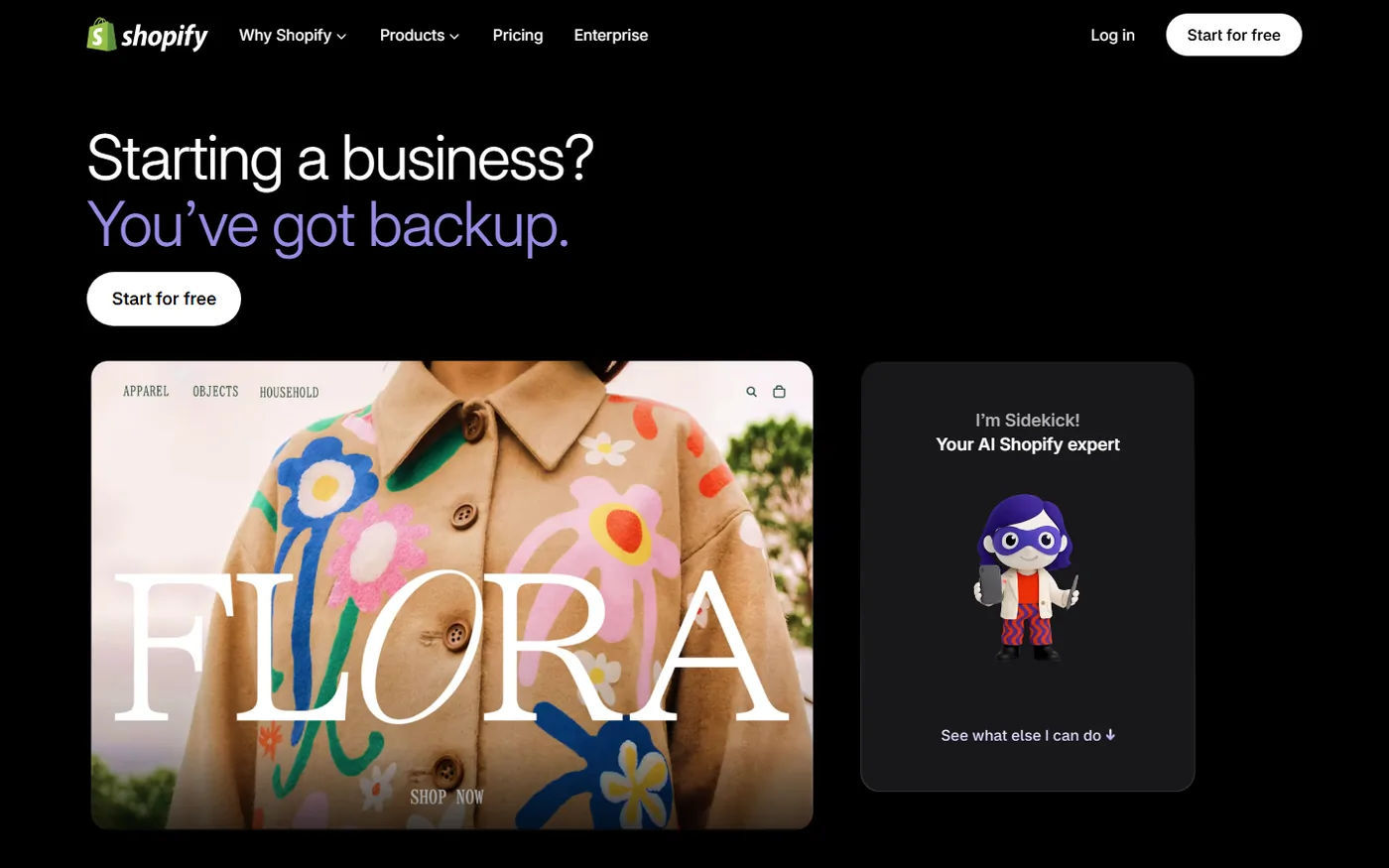
Copy is the safest, highest-return use of AI in a dropshipping store. Shopify's Sidekick can write product descriptions, blog posts and images from inside your admin (Shopify's Sidekick documentation lists what it can do), and any chat assistant can draft titles, bullets and meta descriptions.
Three things keep AI copy from hurting you:
- Feed it facts, not vibes. Paste the supplier's specs (dimensions, materials, battery, what's in the box). Without them, the model invents plausible details, and "stainless steel" becomes a refund when the item arrives as plated aluminum.
- Ban claims you can't back. No "clinically proven," "FDA approved," "waterproof" (unless rated) or "#1 bestseller."
- Edit for one real reader. Cut the first sentence of every AI draft. It's almost always filler.
Pricing reality: Sidekick comes built into the Shopify admin rather than as a paid add-on, and ChatGPT, Claude and Gemini all have free tiers that are enough for a small catalog. Paid copywriting apps make sense only when you're writing hundreds of listings a month.
AI product images: use with care
This is the area where AI dropshipping goes wrong most often, so it deserves a straight answer: your product photos should be real. Use the supplier's photos, order a sample and shoot your own, or pay for UGC from people who actually hold the product.
AI image editing is fine for things that don't change the product itself: removing a messy background, extending a canvas to fit a 4:5 ad, cleaning up lighting, placing a real product photo onto a plain lifestyle backdrop. Shopify's own website builder page advertises AI image editing for exactly this.
Fully AI-generated product images are a different story. The risks:
- Refunds and chargebacks. If the render looks better than the item, buyers file "not as described" disputes, and payment providers count those against you.
- Ad account problems. Ads that misrepresent products get rejected, and repeat rejections can restrict an account.
- Legal exposure. In the US, the FTC treats misleading ads as deceptive, and its 2024 rule on fake reviews and testimonials specifically covers AI-generated reviews. Don't generate fake review photos or testimonials, ever.
AI for ads
Ads are where AI saves the most money, mostly through the platforms' own automation rather than third-party tools.
- Meta Advantage+. Advantage+ sales campaigns (formerly Advantage+ shopping campaigns) use AI to handle targeting, placements and budget allocation. For most small dropshipping stores, one broad Advantage+ campaign with 4 to 6 creatives is a better starting point than a dozen hand-built interest audiences.
- TikTok Symphony. TikTok's Symphony Creative Studio, opened to all advertisers in 2024, builds short videos from a product URL or product details, with AI avatars and dubbing. Useful for quick variations, but avatar ads tend to look like avatar ads. Real UGC still wins for most products.
- Chat assistants for hooks and scripts. Ask for 20 hooks under eight words, pick three, and film them. That's the cheapest creative testing you'll ever do.
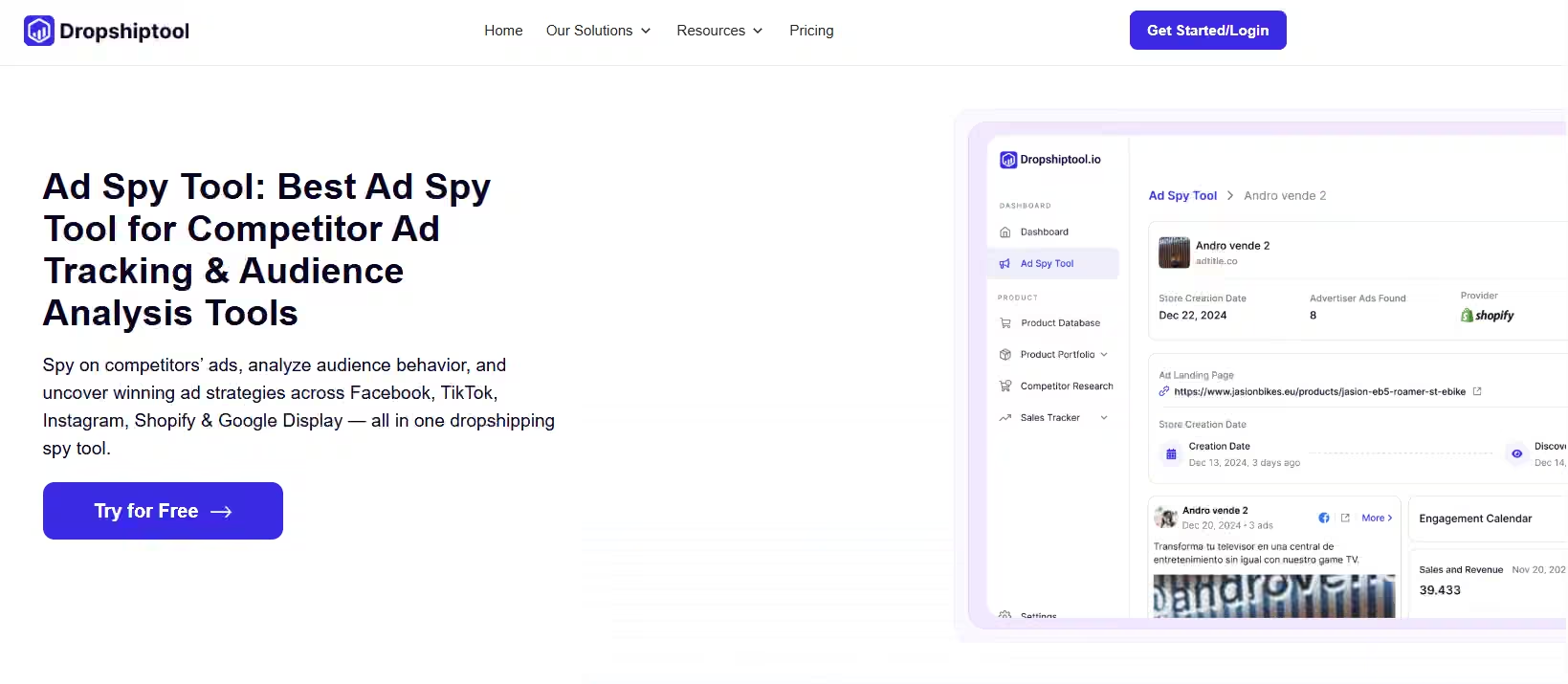
Before writing anything, look at what's already working. Dropshiptool's Ad Spy tool shows active Facebook and TikTok ads for a product, so you can see which angles competitors keep paying to run. Then use AI to write your own spin on the angle, not a copy. Our TikTok ads playbook covers testing structure.
AI for customer service
Most dropshipping support tickets are the same five questions: where's my order, how long does shipping take, can I change my address, how do returns work, and is this item in stock. AI handles those well, especially overnight.
- Shopify Inbox is free and covers basic chat with suggested replies.
- Tidio sells its Lyro AI agent as a usage-based add-on, billed by AI conversations.
- Gorgias bills its AI Agent per automated interaction on top of the helpdesk plan, which makes sense once you're handling hundreds of tickets a month.
Check each vendor's current pricing page, since usage meters change often. Whatever you choose, set clear hand-off rules: refunds, damaged items, chargeback threats and anything with an angry tone go to a human. And feed the bot your real shipping times. A bot that promises "5 to 7 days" when your supplier takes 12 creates more tickets than it closes.
AI for pricing and operations
Supplier costs and shipping rates move. Apps such as AutoDS monitor supplier prices and stock and update your store automatically, and Spocket and AliDrop sync product costs and inventory from their catalogs. That's automation, not genius, but it stops you selling items at a loss after a supplier raises a price.
Where to use a chat assistant: export your orders and costs as a CSV and ask it to find products whose margin fell below a threshold, or to calculate break-even ROAS by product. Then sanity-check the math. Our ROAS vs break-even ROAS guide explains the formula so you can spot a wrong answer.
Worked example. A product sells for $34.99. Product plus shipping costs $12.40, and payment fees are about $1.31 (2.9% + $0.30). That leaves $21.28 before ads, so break-even ROAS is 34.99 / 21.28 = 1.64. If your supplier raises the cost by $3 and nobody updates the price, break-even ROAS jumps to 1.91, and campaigns that were profitable start losing money. A price-sync rule catches that the same day.
AI for SEO, blog content and email
Organic traffic is the cheapest traffic a dropshipping store gets, and AI makes it far quicker to produce category pages, buying guides and email flows. Google's position is clear: its guidance on AI-generated content says it rewards helpful, original content however it's produced, and treats content made mainly to manipulate rankings as spam. In practice that means a 300-word AI article on "best dog beds" that repeats what every other site says won't rank. A guide that includes your own sizing chart, the return rate you see on each size and photos of the real product can.
A workable routine:
- Use AI to draft an outline from the questions customers actually email you.
- Add what only you know: supplier lead times, which variant gets returned most, what buyers say in reviews.
- Have AI tighten the draft, then read it aloud once and cut anything that sounds like a brochure.
For email, AI is good at subject line variations and first drafts of welcome, abandoned-cart and post-purchase flows. Write the offer and the shipping promise yourself. An abandoned-cart email that promises "fast delivery" on a 10-day product is a refund request waiting to happen.
AI for supplier communication
If you source from AliExpress or work directly with factories, AI translation saves real time. Write your message in plain English, ask a chat assistant for a short, polite version in simplified Chinese, and keep the English alongside it so there's no confusion later. It's also handy for summarizing long supplier threads into a list of agreed prices, lead times and packaging details. Always confirm numbers in writing in the supplier's own words before you pay.
How to choose AI tools without wasting money
- Start with what you already pay for. Shopify's Sidekick, Meta's and TikTok's built-in creative tools and the free tiers of chat assistants cover most needs for a store under 100 orders a month.
- Pay for data, not wrappers. Many "AI dropshipping" apps are a chat model with a nicer interface. Tools that give you data you can't get elsewhere (store sales, live ads, supplier stock) are worth more than tools that reword text.
- Check usage meters. Support bots and image tools often bill per conversation or per credit. Estimate a busy month before you subscribe.
- Cancel on a schedule. Review every AI subscription monthly. If you can't name the hours or dollars it saved, cancel it.
AI dropshipping prompts you can copy
Product shortlist ranking: "Here are 8 products with cost, shipping, target price and number of competing stores. Rank them by expected profit per order and saturation risk. Show your math in a table and flag anything with less than $12 profit per order."
Product description: "Write a Shopify product description for [product] using only these specs: [paste]. Audience: [who]. Format: one two-sentence intro, five benefit bullets, a 'What's in the box' list. No medical claims, no superlatives, no invented specs."
Ad hooks: "Give me 20 hooks under eight words for a TikTok ad selling [product] to [audience]. Mix problem-first, curiosity and demonstration angles. No clickbait claims."
Support macro: "Write a friendly reply to a customer asking where their order is. Our delivery window is [X to Y] business days to [country]. Include how to track the order, and offer to check with the supplier if it's past [Y] days."
What AI tools for dropshipping can't do
- Decide what to sell. It can sort data; it can't feel whether a product suits your audience or brand.
- Fix a bad supplier. Slow shipping and poor quality show up in reviews, not prompts. See how to find dropshipping suppliers.
- Take legal or tax responsibility. You're the merchant of record.
- Make a commodity product special. If 300 stores sell the same item from the same supplier, better copy won't save the margin.
How Dropshiptool fits into an AI workflow
AI tools for dropshipping are only as good as the product you point them at. Dropshiptool handles the data side: the Product Database and weekly Product Portfolio for finding candidates, the Sales Tracker and Competitor Research for checking who's selling and how fast, and Ad Spy for seeing which creatives are running. Pair that with Spocket for US/EU suppliers or AliDrop for AliExpress products, then let AI handle the copy, variations and support drafts. You can try Dropshiptool to build your first data-backed shortlist.
A simple AI dropshipping stack for 2026
If you're starting this month, keep it lean: Shopify with Sidekick for store edits and copy, one chat assistant for research analysis and ad hooks, Dropshiptool for product and ad data, one supplier app, and Shopify Inbox until ticket volume justifies a paid helpdesk. Add paid AI tools for dropshipping only when a task is eating more than a few hours a week. For the full app picture, see the best AI apps for Shopify stores.
AI won't pick your winners, but it will give you back the hours to test more of them. Start with Dropshiptool and spend those hours on products with real sales behind them.